
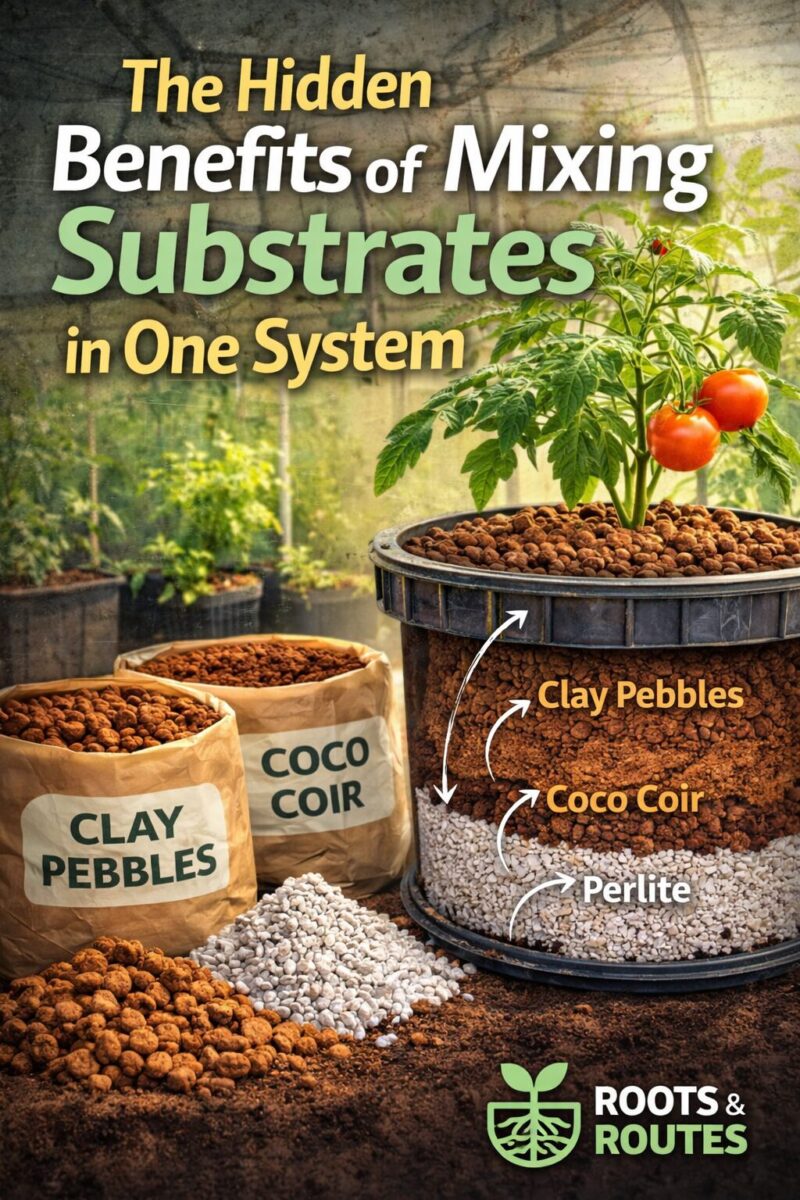
Why Mixing Substrates Can Improve Your Hydroponic System
Most hydroponic growers are told to stick with a single growing medium like rockwool, clay pebbles, or coco coir. It keeps things simple and predictable. But mixing substrates can actually improve water retention, root aeration, and nutrient stability when done correctly.
If you’ve spent any time reading hydroponics guides, you’ve probably heard the mantra: pick one substrate and stick with it. Rockwool, clay pebbles, coco coir, choose your favorite, set it up, and don’t deviate.
It sounds simple, but here’s the thing: what if combining substrates could actually improve your system’s performance? Not just in theory, but in ways you can see in healthier plants and stronger root systems.
Most growers stick to one substrate because it’s easier to manage. Different materials behave differently, and there’s a fear that mixing them will create unpredictable results. In reality, combining two or more substrates can create a micro environment that benefits plant roots, water retention, aeration, and nutrient efficiency.
It’s a subtle technique, but it can make a noticeable difference, especially when growing leafy greens, microgreens, or small vegetables indoors.
What Substrates Really Do
Before diving into mixing, it helps to understand what substrates are doing in your system. At their core, hydroponic substrates provide root support while influencing water retention, aeration, and nutrient delivery.
These factors play a major role in plant health, especially when managing water quality in hydroponic systems.
Rockwool is excellent at holding water but can remain too wet if overwatered.
Coco coir balances water retention and aeration well, though it can compact slightly over time.
Clay pebbles (LECA) are primarily used for aeration. They allow roots to breathe but hold very little moisture.
Vermiculite and perlite are lightweight materials often used to improve drainage or moisture retention depending on how they are used.
Each substrate has strengths and weaknesses. Once you start looking at them this way, it becomes easier to see how different materials can complement each other.
Some substrates hold water. Others create airflow. Some interact with nutrients differently. Understanding these individual properties is the first step toward building a mixed substrate that actually improves your system.
Understanding Substrate Properties
Each hydroponic substrate creates a slightly different root environment. The main characteristics that matter are water retention, aeration, density, and nutrient interaction.
Rockwool holds a large amount of water while still allowing moderate airflow. This makes it excellent for seedlings but sometimes risky if irrigation is too frequent.
Coco coir offers a balanced environment with good moisture retention and airflow. It behaves somewhat like soil but drains more consistently.
Clay pebbles provide extremely high aeration and excellent drainage. However, they hold very little water on their own.
Perlite is lightweight and creates air pockets that improve drainage and oxygen availability.
Vermiculite behaves almost the opposite of perlite. It holds significant moisture and can retain small amounts of nutrients that roots can access later.
When these materials are combined, their properties interact. One substrate may retain moisture while another ensures the root zone remains oxygenated. Another may help stabilize nutrient availability.
The result is a more balanced growing environment.
Substrate Performance Comparison for Hydroponic Mixes
| Substrate | Water Retention | Aeration | Nutrient Interaction | Key Characteristics | Best Use |
|---|---|---|---|---|---|
| Rockwool | Very high | Moderate | Mostly neutral once conditioned | Excellent moisture retention while still allowing airflow | Seed starting and maintaining consistent moisture |
| Coco Coir | High | Good balance | Can bind calcium and magnesium | Balanced moisture retention with steady drainage | General purpose hydroponic growing medium |
| Clay Pebbles (LECA) | Low | Very high | Inert | Promotes airflow and rapid drainage | Drainage layers, aeration zones, net cups |
| Perlite | Low to moderate | Very high | Inert | Lightweight material that creates air pockets | Improving drainage and oxygen availability |
| Vermiculite | Very high | Low to moderate | Can hold and slowly release nutrients | Strong moisture retention and nutrient buffering | Seed germination and moisture buffering |
Mixing vs Layering Substrates
Once you understand what each substrate contributes, the next step is deciding how to combine them. Growers typically do this in two ways: mixing materials together or layering them into separate zones.
Both approaches can improve root conditions, but they create slightly different environments.
Mixing Substrates
Mixing substrates means blending materials evenly throughout the growing medium. This produces a consistent environment where moisture, oxygen, and nutrients are distributed throughout the root zone.
For example, combining coco coir with perlite spreads aeration across the entire substrate rather than concentrating it in one area.
This approach tends to produce predictable results and is usually the easiest method for growers experimenting with mixed substrates.
Common examples include:
Coco coir and perlite for balanced moisture and airflow.
Coco coir and clay pebbles for stronger root oxygenation.
Coco coir and vermiculite for improved moisture retention during germination.
Layering Substrates
Layering works differently. Instead of blending materials together, each substrate is placed in a specific position within the growing container.
This creates zones with different functions.
A typical layered setup might look like this:
Top layer: rockwool or coco coir to support seedlings and retain moisture.
Middle layer: coco coir or vermiculite to maintain hydration around developing roots.
Bottom layer: clay pebbles or perlite to improve drainage and oxygen flow.
Layering can work particularly well in net cups, vertical towers, or ebb and flow systems where water movement naturally creates moisture gradients.
Roots often grow downward through these layers and take advantage of each environment.
Example Substrate Mixes for Common Hydroponic Systems
Different hydroponic systems benefit from slightly different substrate combinations. Here are a few simple setups growers commonly use.
DWC Systems
Rockwool cubes placed in net cups surrounded by clay pebbles create a stable environment for seedlings while allowing roots to grow into oxygen rich zones.
Microgreens Trays
A mix of roughly 80 percent coco coir and 20 percent vermiculite helps retain moisture during germination while preventing overly wet conditions.
Ebb and Flow Systems
A mixture of about 60 percent clay pebbles and 40 percent coco coir provides good drainage while maintaining enough moisture between flood cycles.
Drip Systems
A blend of around 70 percent coco coir and 30 percent perlite creates balanced aeration and consistent moisture delivery.
The Hidden Benefits of Mixing Substrates
Mixing substrates isn’t just an experiment. It can solve practical problems in hydroponic systems.
Improved Water Balance
One of the biggest advantages is better water management. Some substrates drain quickly while others hold moisture longer.
By combining them, you can create environments where water drains efficiently but still remains available near the root zone.
This helps prevent root rot while ensuring plants stay hydrated.
Nutrient Optimization
Different substrates interact with nutrients differently.
Coco coir tends to bind calcium and magnesium. Vermiculite can hold and slowly release nutrients over time.
By combining substrates, you can create a buffering effect that reduces sudden nutrient fluctuations. This is particularly useful in smaller hydroponic systems where nutrient concentrations can change quickly.
Root Aeration and Disease Prevention
Too much water in one zone can encourage root pathogens. Too little oxygen slows plant growth.
Mixed substrates create pockets of air and moisture throughout the root zone, supporting healthy root development and reducing the risk of fungal infections.
Cost Efficiency
Mixing substrates can also reduce costs.
Materials like rockwool can be more expensive than coco coir or vermiculite. Using a small amount of a premium substrate where it matters most while filling the rest with a more affordable material can lower costs without sacrificing performance.
It’s not just about saving money. It’s about letting each substrate do what it does best.
How to Mix Substrates Correctly
Mixing substrates is simple, but a few guidelines help avoid common mistakes.
Start with compatible materials. Substrates with extremely different particle sizes can sometimes separate or compact unevenly.
If layering substrates, place well draining materials at the bottom and moisture retaining materials closer to the plant.
Monitor pH and nutrient levels during the first few growing cycles since some substrates can slightly influence nutrient availability.
Most importantly, experiment on a small scale first. Testing a single tray or container allows you to observe how plants respond before changing an entire system.
Surprising Insights
One thing that surprises many growers is how adaptable plant roots are.
Roots naturally grow toward areas that provide the best balance of moisture, oxygen, and nutrients. In mixed substrates, this often encourages broader and stronger root development.
Microgreens and leafy greens can sometimes grow faster when substrates are combined. A thin layer of vermiculite beneath coco coir, for example, can maintain moisture long enough to improve germination without making seedlings soggy.
Mixed substrates can also buffer small nutrient mistakes. If nutrient levels fluctuate slightly, the diversity of materials can reduce plant stress while adjustments are made.
Not sure which hydroponic system to try next? Check out our Hydroponic System Selector Tool to see the types of systems we recommend based on system size and style.
Who Should Try This
Mixed substrates are not necessary for every hydroponic system.
Beginners may find it easier to start with a single substrate until they understand how their system behaves.
However, growers looking to optimize performance or experiment with system improvements often benefit from mixed substrates.
Systems that tend to benefit the most include:
DWC tubs used for leafy greens
Microgreen trays with delicate seedlings
Ebb and flow systems with uneven drainage
Vertical or tower gardens where water distribution varies between levels
Growers trying to improve yields may also benefit from optimizing lighting efficiency and light distribution in indoor setups alongside substrate adjustments.
Frequently Asked Questions About Mixing Hydroponic Substrates
Is it safe to mix hydroponic substrates?
Yes. Many growers combine materials like coco coir and perlite to balance moisture retention and aeration. The key is understanding how each substrate affects the root environment.
Can mixing substrates improve plant growth?
In some systems it can. Mixed substrates often improve oxygen availability, stabilize moisture levels, and help buffer nutrient fluctuations.
Should beginners mix substrates?
Beginners can experiment, but starting with a single reliable substrate first helps you understand how your system behaves before introducing more variables.
Wrapping It Up
Mixing substrates is one of those simple techniques that doesn’t require expensive equipment or complicated upgrades.
With the right combination of materials, you can improve water retention, aeration, nutrient stability, and root health.
Small adjustments like substrate combinations, lighting improvements, and water quality management can have a surprisingly large impact on hydroponic yields.
Start with small experiments, observe how your plants respond, and adjust as needed.
Sometimes the best improvements in hydroponics come from simple changes and a little curiosity about how different materials work together.