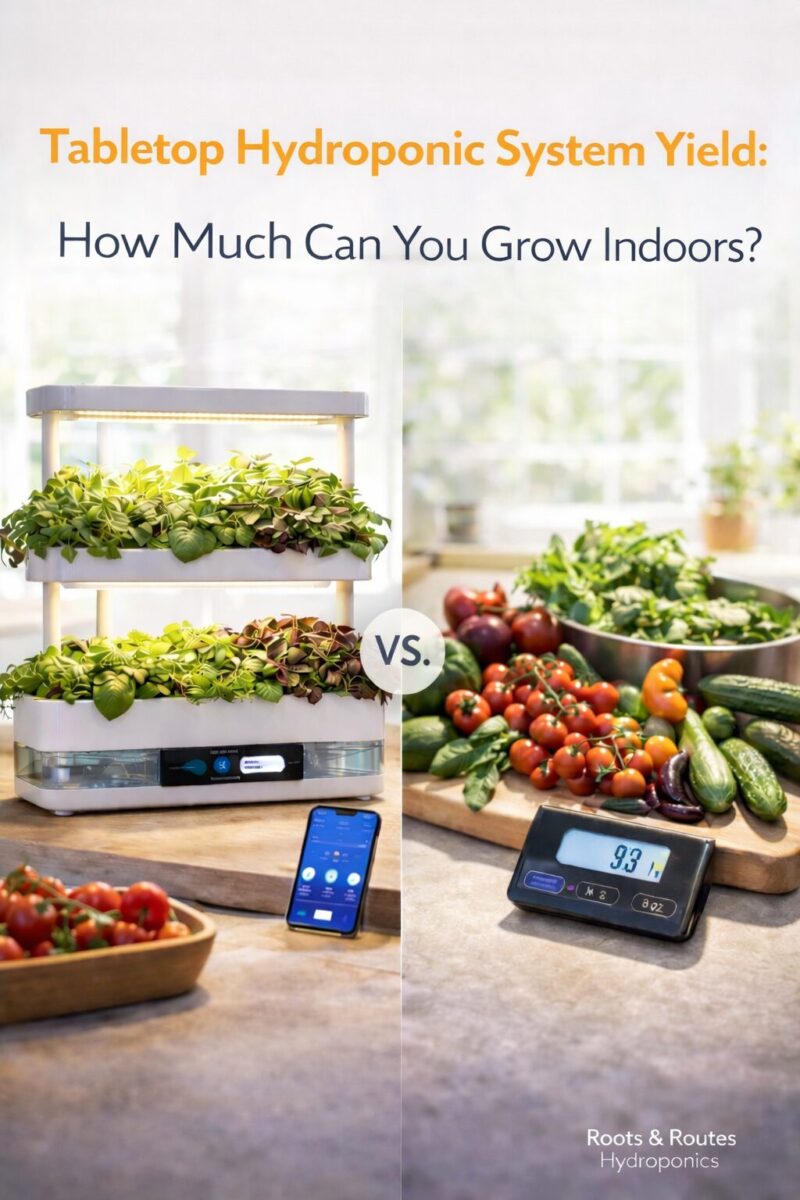
How much can a Tabletop Hydroponic System Yield ?
Realistically, you can grow enough fresh herbs and leafy greens to supplement daily meals, not enough to replace grocery shopping or run a profitable operation. A tabletop system is best viewed as a consistent fresh food source, not a production farm.
That distinction matters, because expectations are where most people get disappointed. Once you understand what these systems are designed to do, the results make a lot more sense.
What a Tabletop Hydroponic System Is Actually Built For
Tabletop hydroponic systems are designed around convenience, consistency, and small-space growing. They prioritize automation over scale. Most models offer between 6 and 12 plant pods, controlled lighting, automatic watering, and compact reservoirs.
They are not meant for:
- High-volume calorie crops
- Large fruiting plants
- Commercial output
They are meant for:
- Herbs you harvest often
- Leafy greens you cut and regrow
- Low-maintenance daily growing indoors
If you approach one expecting grocery-store replacement yields, it will feel underwhelming. If you approach it as a fresh food supplement, it performs well.
Realistic Tabletop System Yield Expectations by Crop Type
Yield depends more on what you grow than the system itself.
Leafy Greens
Lettuce, spinach, arugula, and similar greens perform best.
In a standard tabletop system:
- You can harvest small amounts weekly
- Many varieties regrow after cutting
- One full system can support several salads per week
These crops are forgiving, fast, and efficient in limited root space.
Herbs
Herbs are where tabletop systems shine.
Basil, mint, parsley, cilantro, and chives:
- Grow continuously
- Can be harvested multiple times per week
- Often outproduce what one person needs
This is where the value adds up. Store-bought herbs are expensive and spoil quickly. Homegrown herbs offset that cost easily.
Fruiting Plants
Tomatoes, peppers, and strawberries can grow, but expectations must be lower.
In a tabletop system:
- Plants stay smaller
- Fruit count is limited
- Growth cycles are longer
You might get a handful of cherry tomatoes or a few strawberries, not steady production.
How Much Food Does That Translate To?
Across a full growth cycle, a well-managed tabletop hydroponic system typically produces:
- Ongoing herbs for daily cooking
- Weekly leafy green harvests
- Occasional fruit if attempted
Think in terms of supplementing meals, not feeding a household.
If your goal is:
- Fresh flavor
- Reduced waste
- Year-round greens indoors
The output makes sense.
If your goal is:
- Calorie replacement
- Profit
- Bulk harvests
You need a larger system.
Space, Light, and Plant Density Limit Output
Tabletop systems are constrained by three things:
- Root volume
- Light coverage
- Pod spacing
Even perfect nutrients and lighting cannot overcome physical limits. Overcrowding reduces airflow and yield. Letting plants grow naturally produces better results than trying to force production.
More plants does not equal more food in a small system.
Is a Tabletop Hydroponic System Worth It for Food Production?
For most people, yes — as a supplement, not a solution.
It makes sense if:
- You cook at home regularly
- You use herbs often
- You want low-effort indoor growing
It does not make sense if:
- You want to grow for profit
- You want bulk harvests
- You expect farm-level output
Understanding this upfront prevents frustration.
How to Maximize What You Can Grow
To get the most out of a tabletop hydroponic system:
- Prioritize leafy greens and herbs
- Harvest regularly instead of letting plants bolt
- Avoid oversized fruiting plants
- Maintain consistent light cycles
Simple systems reward consistency more than experimentation.
Tabletop Hydroponic System Yield Final Reality Check
A tabletop hydroponic system will not feed you.
It will provide reliable, fresh produce in a small space with very little effort.
If your expectations match the system’s design, the yield feels satisfying. If they don’t, no amount of optimization will change that.
That’s the honest answer — and it’s why these systems work best as an entry point, not an endpoint.
If you’re curious about actually trying a countertop hydroponic setup or want a system that can deliver more planting capacity than what we described above, something like the LetPot Max is worth a look. Its larger 21‑pod tray — plus an optional 2‑pod large‑plant tray — gives you space for more herbs, greens, and even some larger vegetables compared with many smaller units. That extra capacity means your harvest potential can be higher than what a basic tabletop system typically produces, while still keeping things simple and automated for busy indoor growers.
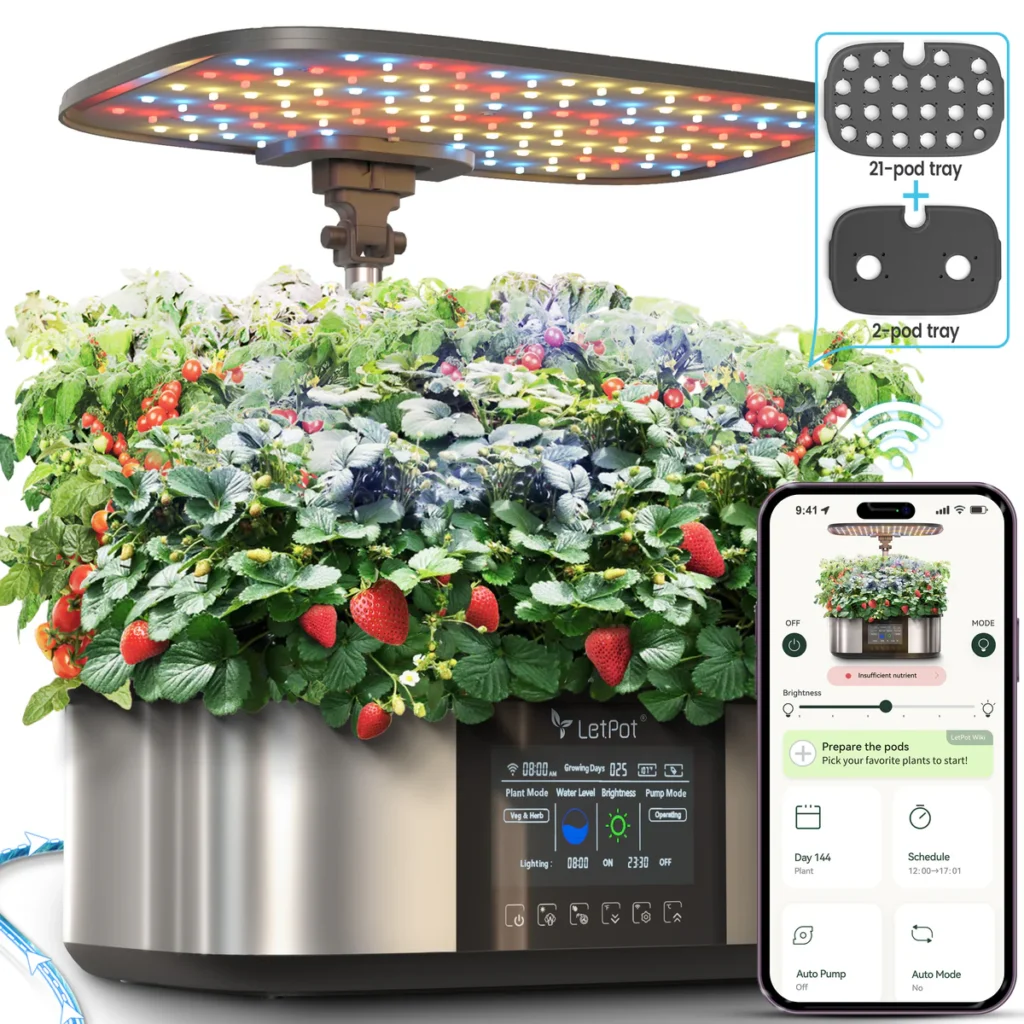
LetPot Max
- Auto Care & Nutrition: Automated water & nutrient delivery for steady, healthy growth.
- Capacity & Light: 21 pods + 36 W full-spectrum LED.
- Smart Control: Touchscreen + mobile app for easy monitoring.
Purchasing through this link supports the site at no extra cost.
Which hydroponic setup is best for your space, goals, and schedule? Our Hydroponic System Selector Tool can help you find the right system — whether it’s a compact tabletop or something larger for more ambitious yields.
Curious how Deep Water Culture works and why it’s perfect for maximizing yield in tabletop systems? Check out our full guide to Deep Water Culture in Hydroponics.