
Proper light scheduling is one of the most important factors for successful hydroponic growth. Plants rely on light not just for photosynthesis but also to trigger specific growth stages. In indoor hydroponic gardens, controlling the duration and intensity of light can dramatically influence plant health, yield, and flowering.
Understanding Photoperiods in Hydroponics
Plants respond to photoperiods, which is the length of light and darkness they receive each day. Light timing is critical because it signals plants to enter vegetative growth, flowering, or fruiting stages.
- Short-day plants: Flower when daylight hours are shorter. Examples: strawberries, certain peppers.
- Long-day plants: Require longer daylight to flower. Examples: lettuce, spinach, basil.
- Day-neutral plants: Flowering is mostly unaffected by day length. Examples: tomatoes, cucumbers.
For a detailed overview of plant types and growth needs, see our Plants page.
Vegetative Growth Light Schedules
During the vegetative phase, plants focus on leaf and stem growth. Light schedules aim to maximize photosynthesis without stressing the plant.
- Common photoperiod: 16–18 hours of light per day, 6–8 hours of darkness.
- LEDs vs HPS/MH: LED lights often allow slightly longer cycles because they generate less heat.
- Tips for small spaces: Use timers to maintain consistent schedules. Consistency is more important than intensity at this stage.
For airflow and heat management during extended light periods, check our Airflow and Heat Control guide.
Flowering and Fruiting Light Schedules
Flowering and fruiting are triggered by altering the light period, usually to 12 hours light / 12 hours dark for most fruiting plants.
- Consistency is critical: Even a single hour of unwanted light during the dark period can delay flowering or cause stress.
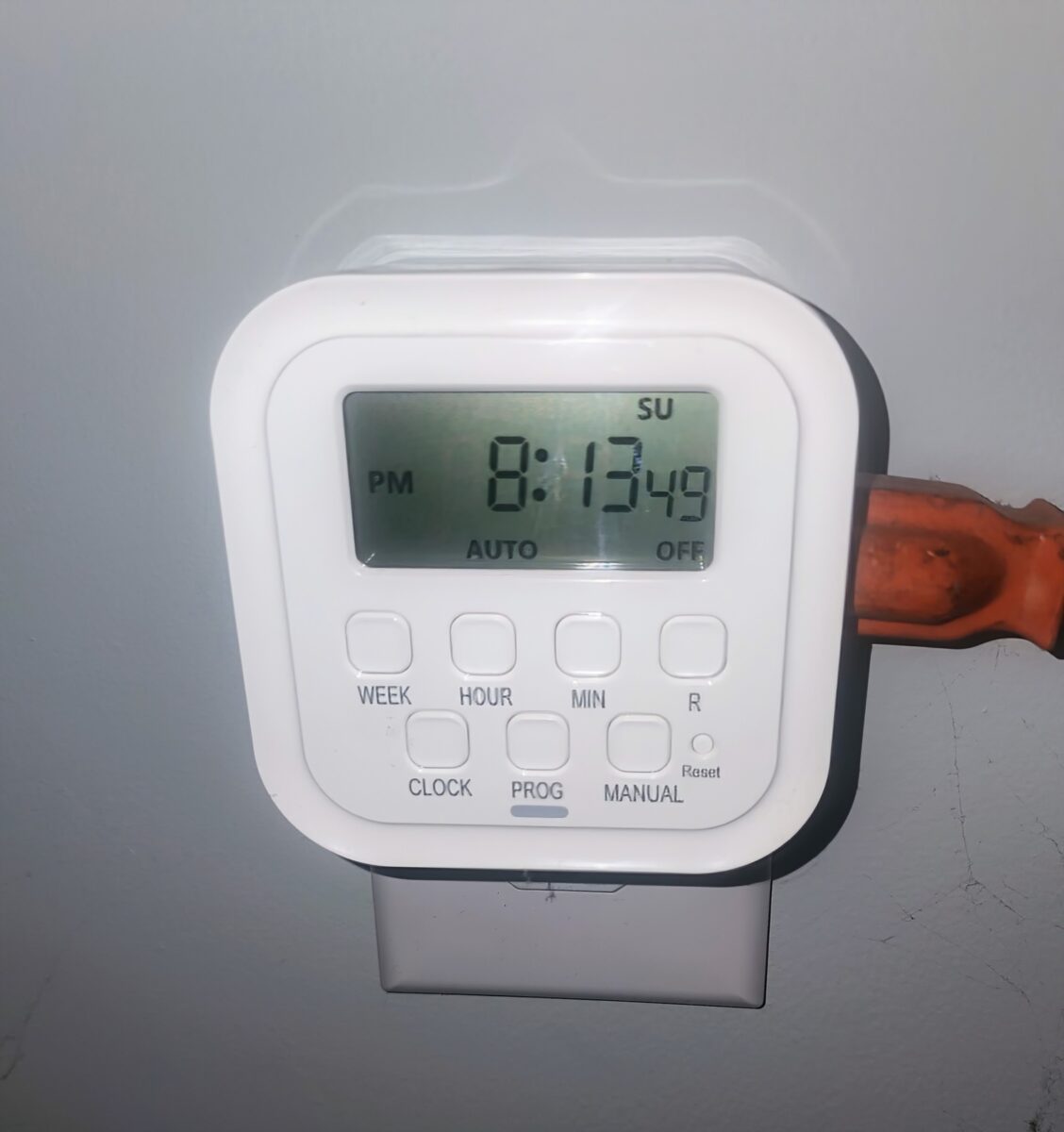
- Timers: Digital timers are recommended for precise control.
- Light type considerations: HPS/MH bulbs emit more heat, so consider air-cooled reflectors or CoolTubes to prevent canopy burn during long light periods.
Learn more about choosing the right light type in our Lighting page and Airflow & Heat Control post.
The Critical Importance of Uninterrupted Darkness
While most growers focus on the intensity of their lights, the darkness is often where the real magic (and the real failure) happens. For photoperiod plants—like peppers, tomatoes, and medicinal herbs—the dark cycle is a chemical trigger.
How Light Pollution Ruins a Harvest: Plants use a protein called phytochrome to “measure” the length of the night. If a stray streetlight, a gap in a curtain, or even a glowing power strip LED interrupts this darkness, it can trigger “Re-vegging” (turning flowers back into leaves) or cause stress-induced hermaphroditism, which leads to seedy, low-quality harvests.
Intermittent Lighting and Advanced Techniques
| Technique | Light/Dark Pattern | Benefits |
|---|---|---|
| 24/0 | 24 hours light, no dark | Fast vegetative growth; risk of stress if too long |
| 18/6 | 18 hours light, 6 hours dark | Balanced vegetative growth, widely recommended |
| 12/12 | 12 hours light, 12 hours dark | Initiates flowering for most fruiting plants |
| 20/4 | 20 hours light, 4 hours dark | Slightly accelerated growth; monitor for heat and water stress |
Practical Tips for Maintaining Light Schedules
- Use reliable timers: Avoid manual switching, as inconsistent light can stunt growth.
- Match schedule to plant type: Leafy greens often benefit from longer light hours, while fruiting plants require strict dark periods.
- Monitor plant response: Signs of stress include yellowing leaves, delayed flowering, or excessive stretching. Adjust schedules or light intensity accordingly.
- Integrate with environmental controls: Temperature and humidity interact with light cycles — for guidance, see our Environment page.
- Timer and Wattage Considerations: For precise control, digital timers are recommended over analog timers because they allow exact on/off schedules and can handle more complex cycles. Make sure your timer and power outlet can support the total wattage of your lights, especially if running multiple high-powered LEDs or HPS bulbs.
“Stop Guessing on Hanging Heights” Don’t let your plants stretch or bleach while you dial in your timer. We built a custom tool that calculates the “Sweet Spot” for your canopy. 👉 [Calculate My Light Distance Now]
Outro
Mastering light schedules is foundational for any hydroponic grower. Proper timing promotes healthy growth, maximizes yield, and reduces stress on your plants. By following the strategies above, you can create a stable, productive indoor garden that thrives year-round.
Free Hydroponics Tools to Help Your Grow
Use these tools together to dial in a complete grow environment. Each one solves a different piece of your system so you can move from guessing to precise control.
- Nutrient Mixing Calculator — calculate exact nutrient dosing based on EC targets, reservoir size, and growth stage
- EC to PPM Converter — instantly convert EC readings into all major PPM scales (500, 650, 700)
- Reservoir Top Off Calculator — fix nutrient spikes by calculating exact dilution water needed
- Light Distance Calculator — find safe hanging distances for grow lights based on wattage, plant stage, and light type to avoid burn while maximizing growth.
- VPD Calculator — analyzes your temperature and humidity to calculate vapor pressure deficit based on your plant type and growth stage.
- Hydroponic System Selector Tool — helps you choose the best hydroponic system for your space and goals with recommended setups.
Questions & Answers
Q: Can I use the same light schedule for all plant types?
A: No. Leafy greens, fruiting plants, and herbs often have different photoperiod needs. Adjust schedules according to the specific plant species.
Q: Do I need to switch lights manually?
A: No. Use timers to automate light cycles. Inconsistent lighting can stress plants and reduce yields.
Q: Can I extend vegetative growth indefinitely?
A: Yes, for most plants. Just ensure proper airflow, nutrient supply, and environmental control to prevent stress or disease.