
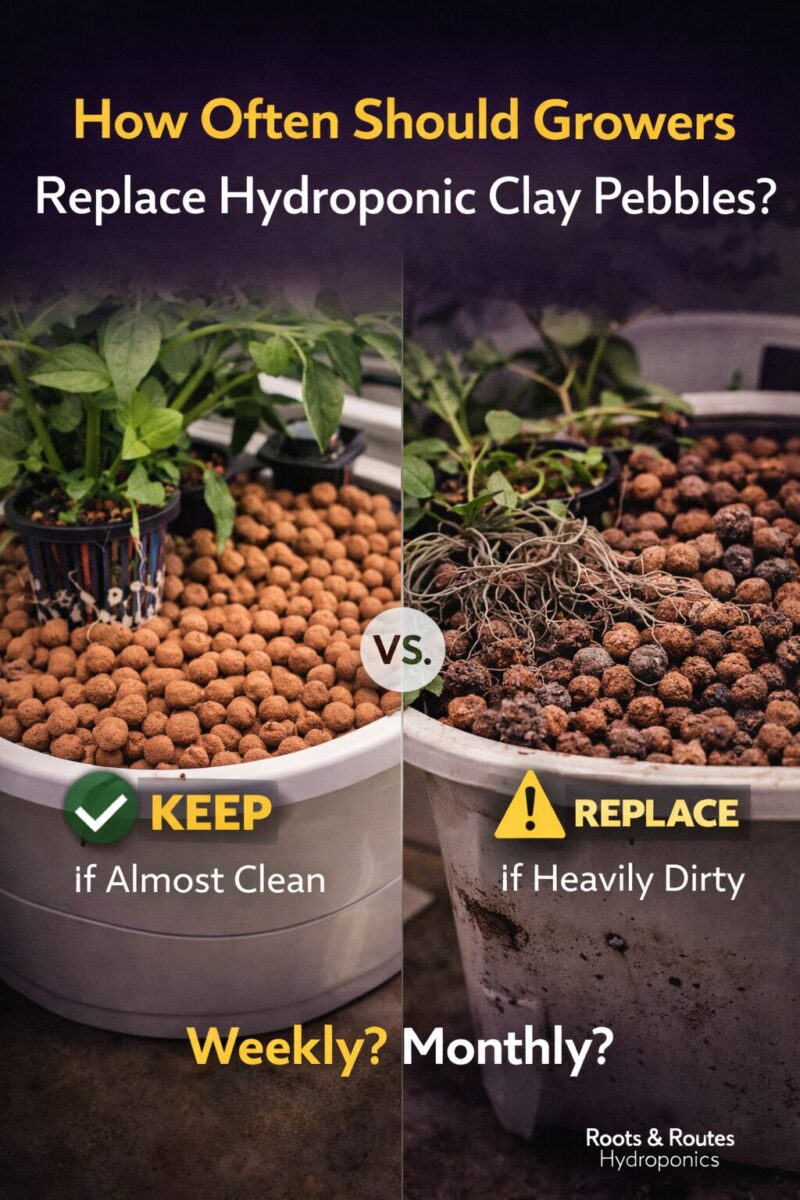
If you’re wondering when to replace hydroponic clay pebbles, the answer isn’t one-size-fits-all. The lifespan of your pebbles depends on how you use your system, the types of plants you grow, and how well you clean and maintain the media between crops. For most growers, clay pebbles last 12–24 months before replacement is necessary, but with careful maintenance, they can stay in use for multiple seasons. Understanding when and how to refresh your pebbles is key to maintaining healthy roots and consistent plant growth.
Signs Your Clay Pebbles Need Replacement
Even if your pebbles are technically reusable, there are certain signs that indicate it’s time to swap them out:
- Algae and Mineral Buildup: Thick layers of algae or white mineral deposits can block water flow and reduce oxygen to the roots. If rinsing doesn’t remove the buildup, it’s a good indicator for replacement.
- Cracked or Crumbling Pebbles: Over time, clay pebbles can break down. Fragile or broken pebbles can clog pumps and disrupt nutrient distribution.
- Odor or Slime: Persistent foul smells or slimy textures even after cleaning often mean organic material has become trapped in the pebbles.
- Reduced System Performance: If water circulation slows, roots start showing stress, or growth declines, old media could be the culprit.
Maintenance Tips to Extend Pebble Lifespan
You don’t have to replace your clay pebbles every season if you take a few preventive steps:
- Rinse Thoroughly After Each Harvest: Remove all plant debris, roots, and old nutrient solution residue.
- Sterilize Between Crops: Soak pebbles in a 10% hydrogen peroxide solution or boil them for 10–15 minutes to kill algae, bacteria, and pathogens.
- Inspect for Damage: Discard any cracked, chipped, or heavily stained pebbles, as these can affect water flow.
- Proper Drying: Allow pebbles to dry completely before storing them to prevent mold growth.
With these simple steps, your clay pebbles can remain safe, clean, and functional for years, saving you money and reducing waste.
How Your Growing System Affects Pebble Longevity
The type of hydroponic system you use can impact how often you need to replace hydroponic clay pebbles:
- Deep Water Culture (DWC) and NFT Systems: Continuous water flow and nutrient exposure may cause faster mineral buildup. Regular cleaning is crucial.
- Ebb & Flow or Flood & Drain Systems: Pebbles may stay wet longer and require thorough rinsing between cycles to prevent root rot.
- Tabletop and Small Space Systems: Smaller systems may accumulate debris faster, but careful maintenance can extend the media lifespan.
In general, more active and nutrient-heavy setups will shorten the time before replacement becomes necessary.
Tips for Choosing Fresh Clay Pebbles
When it’s time to replace old pebbles, choosing high-quality media can make a big difference:
- Look for uniform size and shape to ensure even water distribution.
- Avoid pebbles with dust or fine particles, which can clog your system.
- Consider pre-soaking new pebbles in water for 24 hours to remove any clay dust and improve nutrient absorption.
FAQs
Q: Can I reuse pebbles indefinitely if I clean them well?
A: While proper cleaning can extend their life, pebbles degrade over time. Watch for signs like cracking, discoloration, and algae buildup — these are clear indicators for replacement.
Q: How do I know if mineral buildup is harming my plants?
A: Look for slow growth, yellowing leaves, or water that drains slowly through the pebbles. These are signs that your media is clogged.
Q: Is it better to replace all pebbles at once or gradually?
A: Replacing all pebbles at once is usually best for uniform water and nutrient distribution. Mixing old and new pebbles can create uneven root environments.
Final Thoughts
Clay pebbles are a fantastic medium for hydroponic gardening, offering excellent drainage, aeration, and support for roots. By monitoring their condition and knowing when to replace hydroponic clay pebbles, you’ll keep your plants healthy, maximize yields, and avoid common root problems. With the right maintenance and cleaning routine, you can stretch their lifespan over multiple seasons, keeping your system productive and your gardening experience stress-free.
Free Hydroponics Tools to Dial In Your Grow
Don’t guess on the math. Use these free calculators to implement the exact tips from this guide, protect your root zone, and keep your reservoir balanced.
Hydroponic Calculators and Tools Page
- Nutrient Mixing Calculator — calculate exact nutrient dosing based on EC targets, reservoir size, and growth stage
- EC to PPM Converter— instantly convert EC readings into all major PPM scales (500, 650, 700)
- Reservoir Top Off Calculator — fix nutrient spikes by calculating exact dilution water needed
- Light Distance Calculator — find safe hanging distances for grow lights based on wattage, plant stage, and light type to avoid burn while maximizing growth.
- VPD Calculator — analyzes your temperature and humidity to calculate vapor pressure deficit based on your plant type and growth stage.
- pH Adjustment Calculator & Drift Analyzer — use this hydroponic pH calculator to estimate how much pH Up or pH Down to add, also analyzes long term pH drift patterns to help diagnose unstable reservoirs
- Hydroponic System Selector Tool — helps you choose the best hydroponic system for your space and goals with recommended setups.