Fruiting plants are a rewarding yet more demanding category for hydroponic growers. Unlike leafy greens or microgreens, fruiting plants such as tomatoes, peppers, and strawberries require precise nutrient management, light schedules, and environmental control to produce high yields and flavorful fruit. This guide will walk you through the essential factors for successfully growing fruiting plants hydroponically, including system selection, nutrient strategies, environmental considerations, and common troubleshooting tips.
Choosing the Right Fruiting Plants
Before starting, it’s important to select varieties suited for hydroponic cultivation. Fruiting plants have different growth habits, nutrient needs, and space requirements compared to leafy greens. Here are some top recommendations:
- Tomatoes: Indeterminate varieties are popular for hydroponics because they produce continuously. Cherry and grape tomatoes are especially space-efficient.
- Peppers: Bell peppers, hot peppers, and sweet peppers thrive in controlled hydroponic systems with stable temperatures.
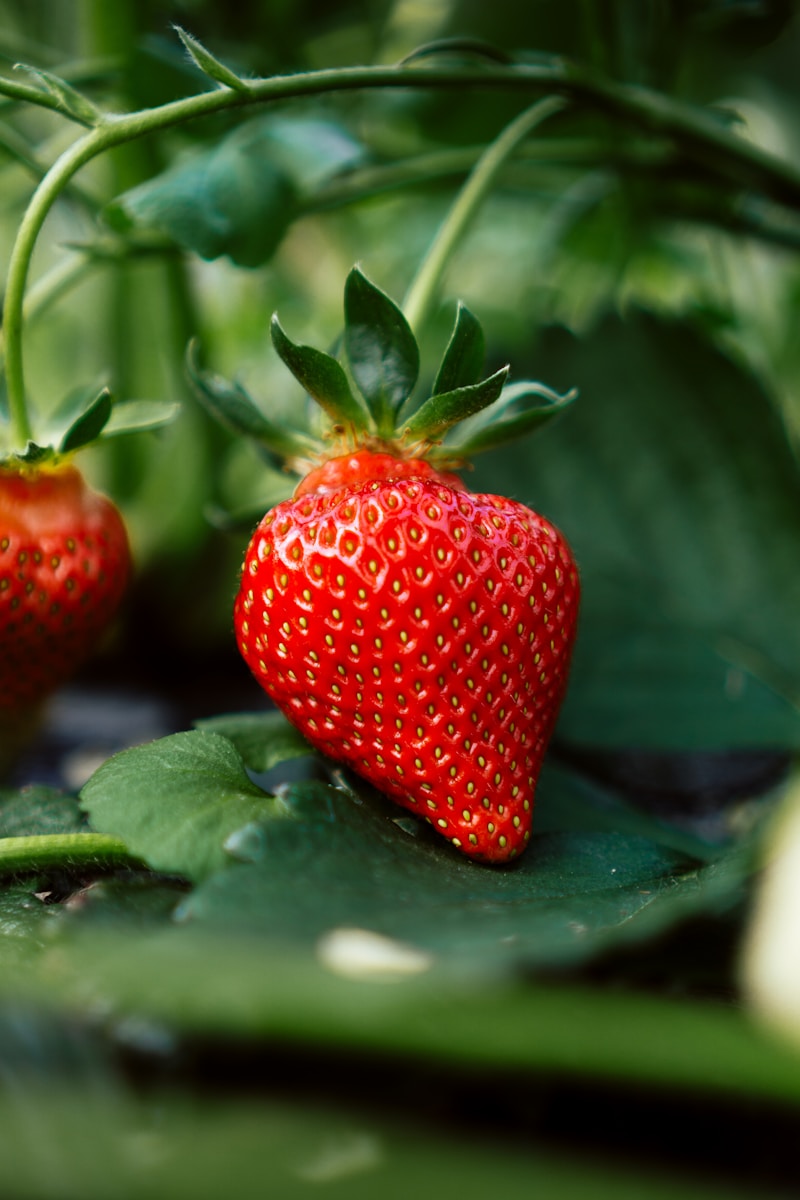
- Strawberries: Ever-bearing or day-neutral varieties work best indoors and offer multiple harvests per year.
For more on plant selection basics, check our Plants page and Best Beginner Plants for Hydroponic Gardening post.
Other Fruiting Plants to Consider
In addition to tomatoes, peppers, and strawberries, there are other fruiting plants that indoor hydroponic growers may find rewarding:
- Cucumbers: Compact varieties like mini cucumbers or pickling cucumbers grow well in DWC and NFT systems. They require consistent pollination and trellising support.
- Melons: Small cantaloupe or honeydew types can be grown hydroponically, but they need warm temperatures, high light intensity, and sufficient root space.
- Blueberries: Require acidic nutrient solutions and careful pH management. Dwarf varieties are best suited for indoor hydroponics.
- Goji Berries: Hardy and nutrient-dense, goji berries adapt well to controlled hydroponic environments and offer multiple harvests per year.
These options allow growers to diversify their indoor hydroponic gardens and experiment with less common fruiting crops, each with its own unique nutrient and environmental needs.
Hydroponic Systems Suitable for Fruiting Plants
Fruiting plants generally need systems that support larger root zones and provide consistent nutrient delivery. Popular options include:
- Deep Water Culture (DWC): Provides oxygen-rich water for vigorous root growth. Ideal for larger plants like tomatoes and peppers. See our Deep Water Culture in Hydroponics guide.
- NFT (Nutrient Film Technique): Good for smaller fruiting varieties, especially strawberries. Roots receive a constant thin film of nutrients. Reference: NFT Systems: Complete Guide.
- Ebb & Flow / Flood & Drain: Offers periodic nutrient delivery, reducing risk of waterlogging while encouraging root aeration. See our Ebb & Flow / Flood & Drain Systems post.
For a full breakdown of hydroponic systems, check the Hydroponic Systems page.
Nutrient Requirements for Fruiting Plants
Fruiting plants demand higher levels of potassium (K) and phosphorus (P) during flowering and fruit development, while maintaining adequate nitrogen (N) for leaf growth. Monitoring and adjusting nutrient ratios is critical to prevent deficiencies and toxicities.
| Plant | Vegetative Stage N-P-K | Flowering / Fruiting N-P-K | Notes |
|---|---|---|---|
| Tomatoes | 3-1-2 | 1-2-3 | Support with trellis or string; prune for airflow. |
| Peppers | 4-1-3 | 2-3-4 | Maintain consistent heat; avoid sudden nutrient changes. |
| Strawberries | 2-1-2 | 1-2-3 | Ensure good pollination; consider fans or manual pollination indoors. |
Regularly monitor pH and electrical conductivity (EC) levels. See Common Water Problems & Fixes and Optimizing Nutrient Management for detailed guidance.
Lighting and Environmental Considerations
Fruiting plants require strong, consistent lighting, especially during flowering and fruit development. Key considerations include:
- Light Intensity: Tomatoes and peppers perform best under 400–600 µmol/m²/s PPFD. Strawberries prefer slightly lower intensity, around 300–400 µmol/m²/s.
- Light Duration: 16–18 hours during vegetative growth; reduce to 12–14 hours during fruiting to simulate natural cycles.
- Temperature & Humidity: Maintain 70–80°F daytime and 65–70°F nighttime for tomatoes and peppers, with 50–70% relative humidity. Strawberries prefer slightly cooler conditions.
- Airflow: Proper ventilation prevents mold, strengthens stems, and aids pollination. Reference: Ventilation & Airflow and Airflow & Heat Management for Grow Lights.
For lighting options and system setup, see Complete Guide to LED Hydroponic Grow Lights.
Pollination Tips for Indoor Fruiting Plants
Indoor hydroponic setups often lack natural pollinators, so manual or assisted pollination is important:
- Use a small brush or electric pollinator to transfer pollen between flowers.
- For tomatoes, gently shake the stems to release pollen.
- Fans can aid pollination for strawberries.
Proper pollination ensures maximum fruit set and uniform growth.
Common Issues and Troubleshooting
| Problem | Cause | Solution |
|---|---|---|
| Blossom End Rot (Tomatoes) | Calcium deficiency or uneven watering | Maintain consistent Ca levels in nutrient solution and steady water supply |
| Blossom Drop (Peppers / Tomatoes) | Temperature stress, low humidity, or insufficient pollination | Adjust environment and manually pollinate |
| Fruit Rot / Mold (Strawberries) | High humidity or poor airflow | Increase ventilation, reduce humidity, remove affected fruit |
For more troubleshooting strategies, see Mistakes That Kill Plants and Disease & Mold Prevention.
Q&A Section
Q: Can I grow fruiting plants in small hydroponic systems?
A: Yes, but choose compact varieties and consider NFT or smaller DWC setups. Reference: Compact / Small Space Hydroponic Systems.
Q: How often should I adjust nutrient solution for fruiting plants?
A: Monitor EC and pH at least twice a week. Adjust nutrient concentrations when plants transition from vegetative to flowering/fruiting stages.
Q: Do strawberries require pollination indoors?
A: Yes, manual or assisted pollination is recommended to maximize fruit set.
Q: Can I grow tomatoes and peppers together?
A: They can share a system if environmental conditions are suitable for both, but monitor nutrient demands carefully.
For more on foundational hydroponics knowledge, see What Is Hydroponics.