
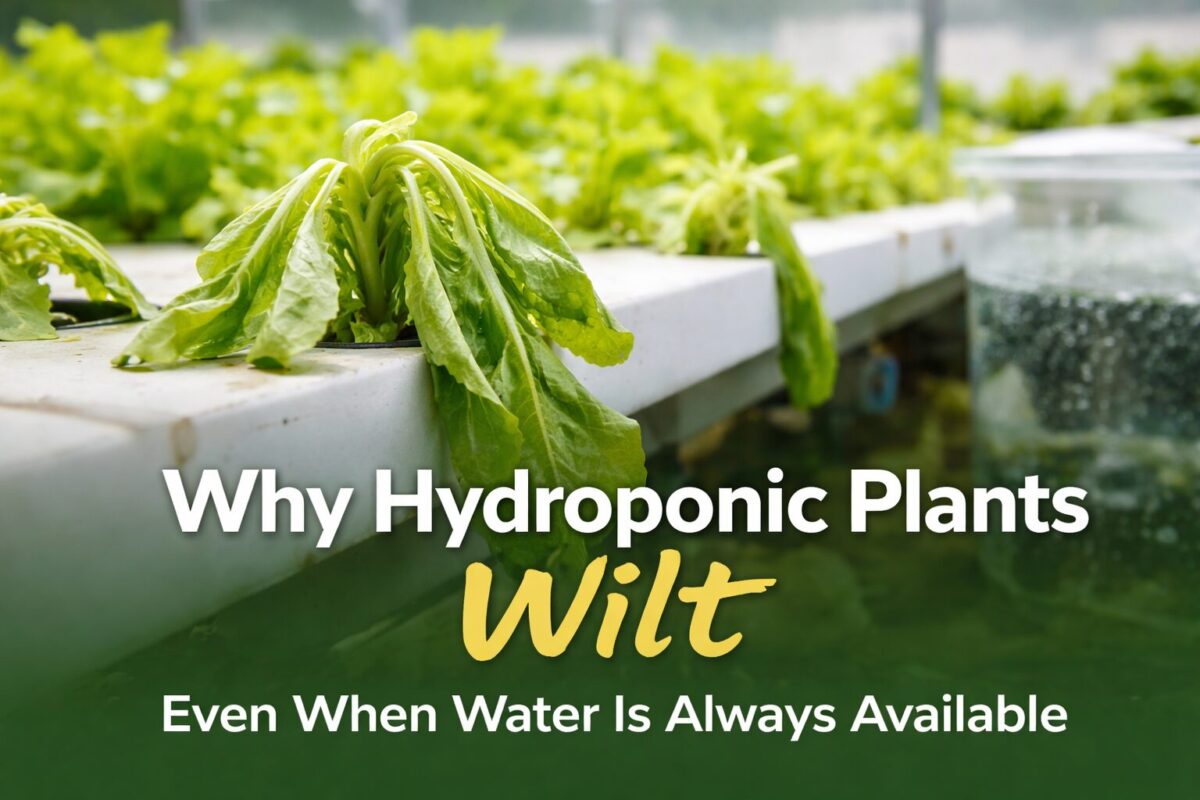
Hydroponic plants can wilt despite constant access to water and that feels backwards at first. You look at the reservoir, everything’s full, pumps are running, and yet the plant looks like it hasn’t had a drink in days. When this happens, the issue is almost never a lack of water. It’s usually that the roots can’t use the water properly, even though it’s right there.
This is one of those problems that catches people off guard because it doesn’t look like a classic mistake. Everything appears “on,” but something underneath isn’t working the way it should.
Wilting in hydroponics is a root environment problem first, and a plant problem second.
Oxygen Deprivation Is the Most Common Cause
Roots need oxygen just as much as they need water, and hydroponic systems make it easy to forget that. When everything is submerged and quiet, oxygen can drop faster than you expect.
This usually happens when:
- Water sits still longer than intended
- Air stones are underpowered or slowly clogging
- Roots stay submerged without enough dissolved oxygen
When oxygen levels fall, roots stop absorbing water efficiently. The plant reacts by wilting, even though the system looks full and functional.
If you’ve ever added more aeration and watched a plant perk up later that day, this is why.
Root Temperature Can Trigger Wilting Fast
Water temperature matters more than most growers realize, especially indoors. Warm water simply cannot hold as much oxygen.
Once reservoir temperatures drift into the low to mid 70s, root stress accelerates. Wilting often shows up:
- In the afternoon or after lights have been on for hours
- On otherwise healthy-looking plants
- With partial recovery overnight
This is why systems that run fine for weeks can suddenly struggle when the room warms up, even if nothing else changed.
Salt Buildup Can Block Water Uptake
Wilting doesn’t always mean underfeeding. Sometimes it’s the opposite.
High nutrient concentration can create osmotic pressure that makes it harder for roots to pull in water. The plant slowly dehydrates while sitting in solution. This doesn’t always cause immediate burn or discoloration, which makes it easy to miss.
If wilting started after increasing feed strength or after running the same solution longer than usual, nutrient buildup is worth checking before changing anything else.
Root Damage Often Goes Unnoticed
Root issues don’t announce themselves right away. By the time leaves start drooping, the problem may have been developing quietly for days.
Wilting can come from:
- Early root rot
- Minor mechanical damage during transplant
- Roots drying briefly during a pump or flow issue
Healthy roots should be light-colored and firm. Any browning, slime, or smell is worth paying attention to, even if the plant still looks “mostly fine” above the surface.
System Design Can Work Against You
Some systems are simply less forgiving than others, especially in real-world setups.
Small reservoirs heat up faster. Narrow channels clog more easily. Uneven flow rates cause roots to swing between saturated and stressed. None of these are dramatic failures, but together they create conditions where wilting keeps coming back.
This is why system choice matters less for peak growth and more for day-to-day stability.
What to Do First When Plants Wilt
Before tearing the system apart or changing everything at once, start with the basics:
- Increase aeration or circulation
- Check reservoir temperature
- Inspect roots directly
- Confirm nutrient strength hasn’t slowly climbed
Most wilting issues resolve once the root zone settles down. Plants usually respond faster than people expect when the underlying stress is removed.
Final thoughts
Wilting in hydroponics is rarely about water volume. It’s about oxygen, temperature, and root health working together. When roots are comfortable, plants stay upright and responsive. When they’re stressed, leaves tell you quickly.
If you want deeper breakdowns on system types, environmental control, and root-zone management, all of those topics are organized on our Resources page, where the core hydroponic guides live in one place.