
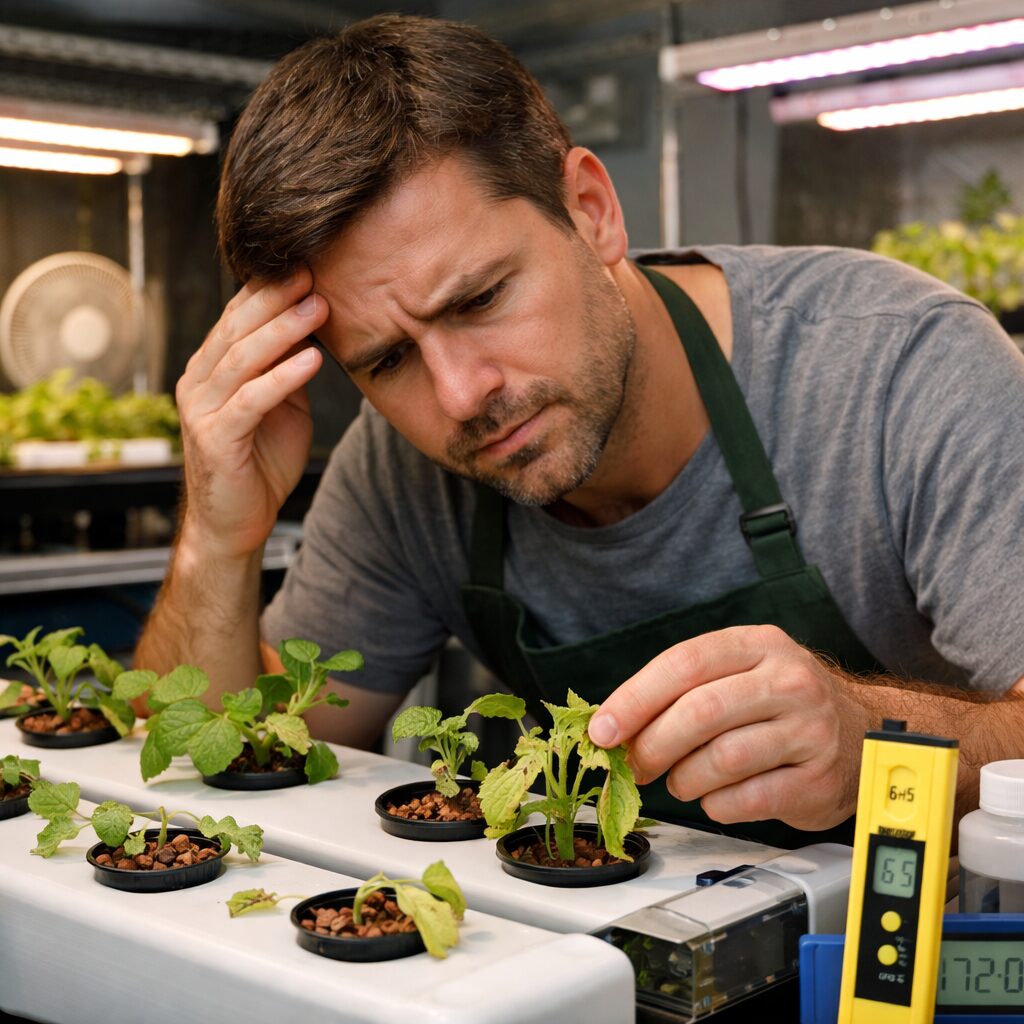
If you’re asking Why Won’t My Hydroponic Plants Grow? The short answer is usually this: something basic is out of balance, not broken. In most indoor hydroponic setups, slow or stalled growth comes from a small mismatch between light, nutrients, water, or airflow rather than one big mistake.
The frustrating part is that everything can look “mostly fine” and plants still just sit there.
This post walks through the most common reasons hydroponic plants stop growing and how to figure out which one actually applies to your setup without tearing everything apart.
Growth problems usually show up before visible damage
One thing that trips people up is expecting dramatic symptoms. Yellow leaves, drooping plants, burned tips. Those do happen, but in hydroponics, growth often slows long before anything looks obviously wrong.
If plants are:
- Staying the same size for days
- Producing smaller new leaves
- Developing thin or weak stems
That’s already a signal. The system is running, but it isn’t supporting growth efficiently.
At that point, the goal is not to chase numbers. It’s to check the fundamentals in the right order.
Light is often the real bottleneck
In indoor hydroponics, light limits growth more often than nutrients do.
This doesn’t always mean the light is too weak. Just as often, it’s positioned poorly or running on a schedule that doesn’t match the plant.
Common light related issues include:
- Light too far away, especially with LEDs
- Light intensity pushed too high in a small space
- Inconsistent daily light schedule
Plants that don’t get enough usable light won’t grow no matter how perfect the nutrient mix is. Before adjusting feed strength or additives, it’s worth confirming the light is close enough, stable, and not overheating the canopy.
Nutrient strength matters less than consistency
Another common reason hydroponic plants stall is nutrient instability.
This usually isn’t about using the “wrong” nutrient line. It’s about how often the solution changes.
Small reservoirs react fast. Topping off with plain water, adjusting pH repeatedly, or remixing nutrients too often can cause swings that plants need time to recover from.
If growth slows shortly after frequent adjustments, the issue may not be deficiency at all. It may be stress from constant change.
A steady, repeatable mix that stays close to target is almost always better than chasing ideal numbers daily.
Root health quietly controls everything above it
When plants stop growing, the roots are often the first place to check.
Healthy hydroponic roots are:
- Light colored
- Firm
- Smell neutral or slightly fresh
Slow growth paired with darkening roots, slimy texture, or sour smell points to oxygen or temperature issues rather than nutrients.
Warm water, weak aeration, or stagnant flow can reduce oxygen long before roots look “bad.” Growth slows as the plant conserves energy.
If roots are stressed, fixing light or feed won’t help until oxygen and water movement improve.
Airflow affects growth more than most people expect
Even when everything else is dialed in, poor airflow can quietly stall growth.
Without gentle air movement:
- Leaf temperature rises
- Transpiration slows
- Nutrient uptake becomes less efficient
This doesn’t require powerful fans. In many setups, a small fan moving air across the plants is enough to restart growth that seemed stuck for no obvious reason.
Airflow is one of the easiest things to fix and one of the most commonly overlooked.
When nothing seems wrong, time might be the answer
This is the part nobody likes hearing.
Sometimes hydroponic plants don’t grow because they’re adjusting. New systems, transplanted seedlings, or recently corrected setups often pause before growth resumes.
If:
- Roots look healthy
- Leaves aren’t worsening
- Conditions are stable
The best move can be to stop changing things and give the system a few days. Plants respond better to calm environments than constant tweaking.
What to do next if growth is stalled
If your hydroponic plants aren’t growing, don’t try to fix everything at once. Start with light position and schedule, confirm nutrient consistency, check root health, and improve airflow if needed.
If you’re unsure whether your system type or size is working against you, our Hydroponic System Selector Tool can help narrow down setups that are easier to keep stable based on space and experience level.
You can also explore our Resources Page for detailed guides on lighting, nutrients, airflow, and system types to dig deeper into any specific issue.