Efficient airflow is critical in hydroponic gardens. Inline ducting and exhaust systems control temperature, humidity, CO₂ distribution, and odor. A properly designed system keeps plants healthy, reduces stress, and ensures even growth across the canopy.
Learn More about Environments <Here
Why Exhaust Systems Are Critical
- Climate Control: Pulls hot air away from lights and canopy for stable temperatures.
- Humidity Management: Reduces the risk of mold, mildew, and root stress.
- CO₂ Distribution: Ensures fresh air with adequate CO₂ reaches all plants.
- Odor Reduction: Carbon filters scrub smells before air exits the grow space.
Fan Sizing and Hood Matching
Calculate the grow room volume: Length × Width × Height, then determine the number of air exchanges per minute (1–3 for typical tents). Choose a fan rated to handle this CFM, then adjust for duct losses, bends, and filters.
Hood Duct Matching: Different lights and hoods require different airflow and duct diameters. Always match hood duct size with your inline fan and ducting to prevent backpressure, heat buildup, or uneven airflow.
See our post: Complete Guide to MH & HPS Grow Lights for Hydroponics
Adjusting for Real-World Losses
- Carbon filters: reduce effective airflow by 20–30%.
- 90° bends: each bend reduces airflow by 10–15%.
- Long duct runs: friction can reduce airflow 5–10% per 5 ft.
Fan Types and Placement
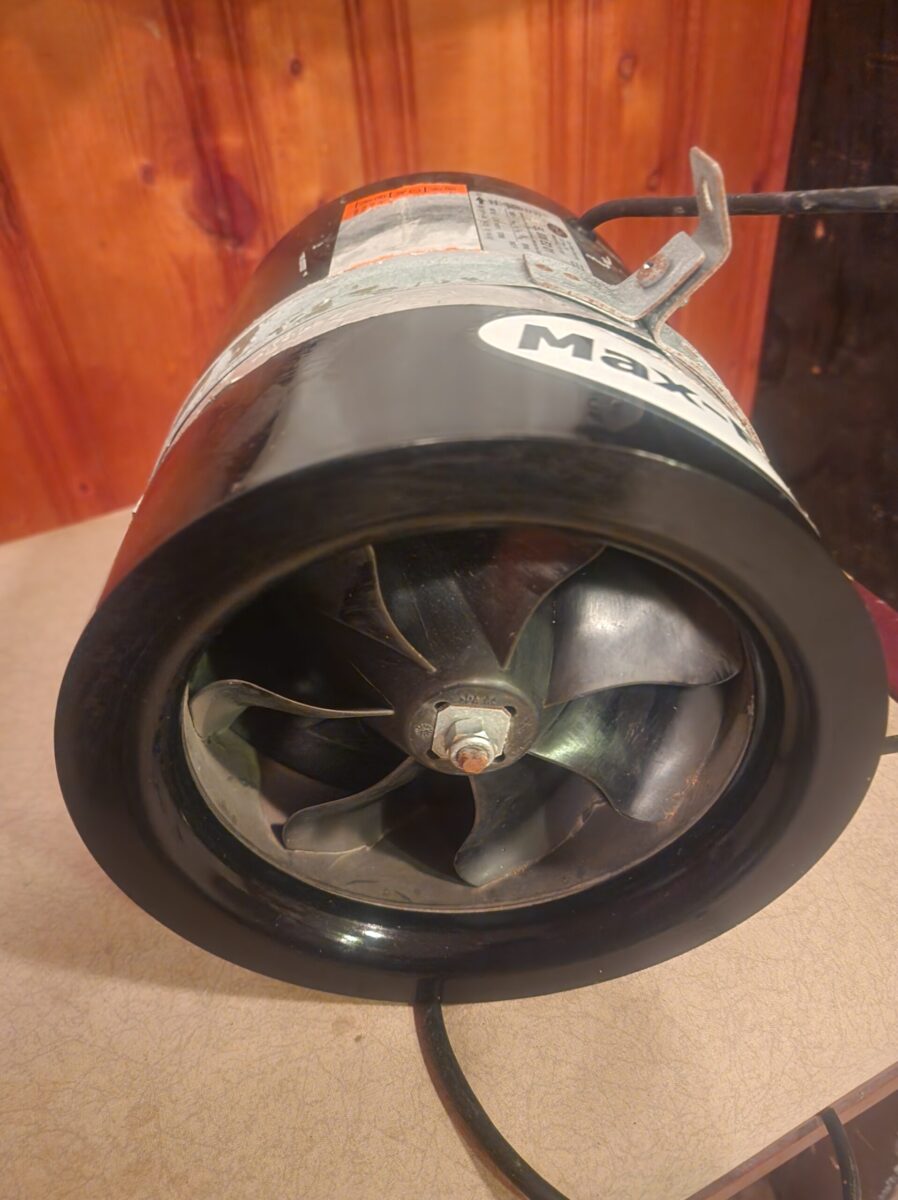
Inline Fan Options
- 4″ fans – small tents or compact spaces.
- 6″ fans – medium tents, moderate heat loads.
- 8″+ fans – large rooms or high-wattage lighting.
- Variable-speed or EC fans – fine-tune airflow and reduce noise.
Fan Placement Tips
- Mount inline fans on walls or ceilings with rubber isolation hangers to reduce vibration.
- Use flexible ducting sparingly; rigid ducting near fans improves efficiency.
- Minimize sharp 90° elbows; use gradual bends or multiple 45° angles.
- Ensure fans blow air in the intended direction, usually exhaust through filters.
Ducting Materials and Layout
- Rigid ducts: best near fan, minimize turbulence.
- Flexible insulated ducts: reduce heat transfer and noise, but increase resistance.
- Sealing joints with foil tape ensures maximum airflow.
- Always match duct size to fan and hood diameter for optimal efficiency.
Carbon Filters
Use carbon filters for odor control. Place before the fan in the airflow direction. Replace when airflow drops or filter lifespan ends. Pre-filters extend carbon filter life.
Intake and Exhaust Balance
Exhaust fans pull air out, but intake must supply fresh air.
- Passive intake: vents or openings for smaller tents.
- Active intake: fan pulls air in, usually at ~70–80% of exhaust fan CFM for slight negative pressure.
Installation Best Practices
- Mount fans securely using vibration isolation hangers.
- Install backdraft dampers on intake ducts to prevent reverse airflow.
- Keep duct runs short, smooth, and as straight as possible.
- Reduce bends and elbows; each one decreases airflow.
- Match hood duct diameter to inline fan and ducting size.
- Use insulated or muffled ducts if noise is a concern.
- Check that all joints are sealed with foil tape to prevent leaks.
Troubleshooting Common Issues
| Problem | Cause | Solution |
|---|---|---|
| Low airflow | Fan undersized, filter too restrictive, duct too long | Upgrade fan, shorten duct, reduce bends, or increase CFM |
| Backflow when fan off | No backdraft damper or poorly sized intake | Install backdraft damper and ensure proper intake sizing |
| Hot or stale zones | Poor duct layout or insufficient circulation | Reconfigure ducts, add circulation fans, and check hood/fan matching |
| Noise / vibration | Improper mounting or fan resonance | Use rubber isolation hangers or vibration pads |
FAQ
How often should carbon filters be replaced?
Filters last 12–24 months depending on use and airflow. Replace if airflow decreases significantly or odor removal drops.
Do I need a silencer or muffler?
Not always, but insulated ducts or mufflers reduce noise without sacrificing much airflow. Adjust fan speed if necessary.
Is a bigger fan always better?
Oversizing gives flexibility but may waste energy if not adjusted. Slightly larger fans are good if ducting has multiple bends or filters.
Can intake and exhaust fans run simultaneously?
Yes, especially in sealed rooms. Maintain intake at ~70–80% of exhaust CFM to achieve slight negative pressure without airflow issues.
Final Thoughts
Inline ducting and exhaust systems are essential for a stable, healthy hydroponic garden. Proper fan sizing, hood-to-duct matching, balanced intake and exhaust, and carefully planned duct runs ensure temperature, humidity, and CO₂ are optimal. Following these guidelines gives reliable airflow, reduces stress on plants, and improves overall growth and yield.