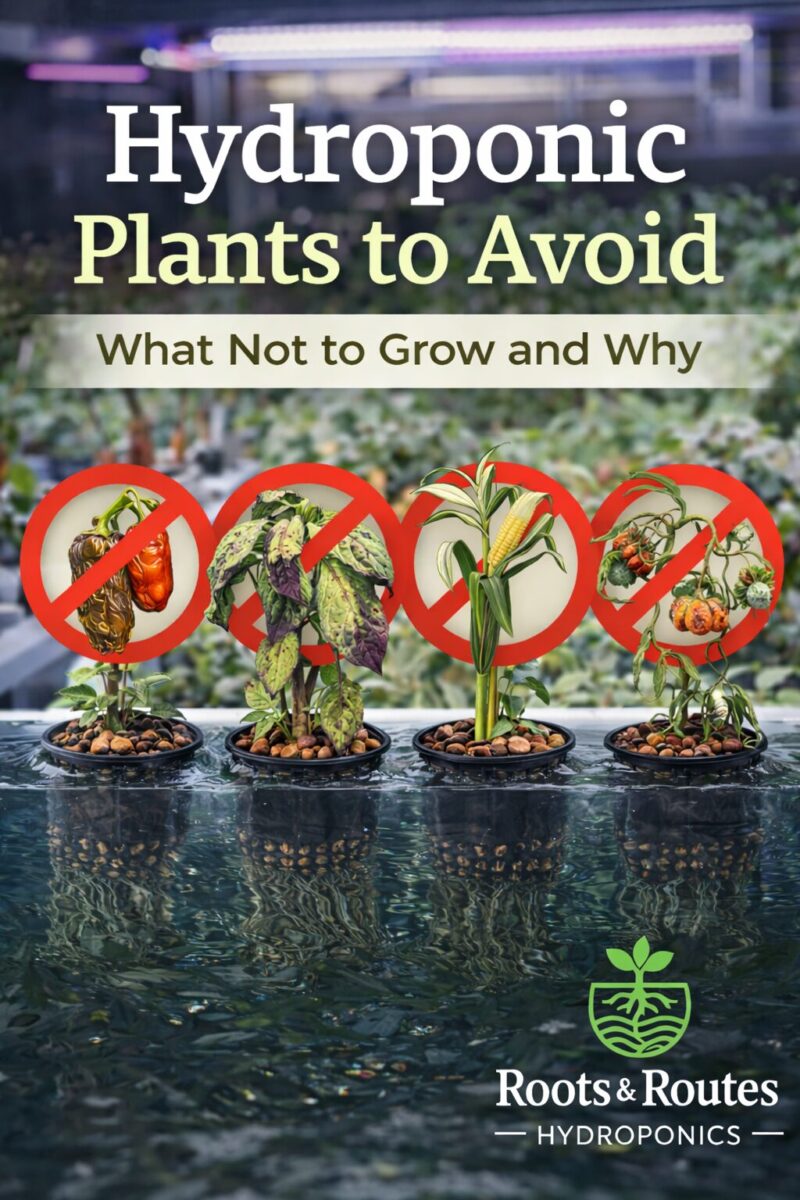
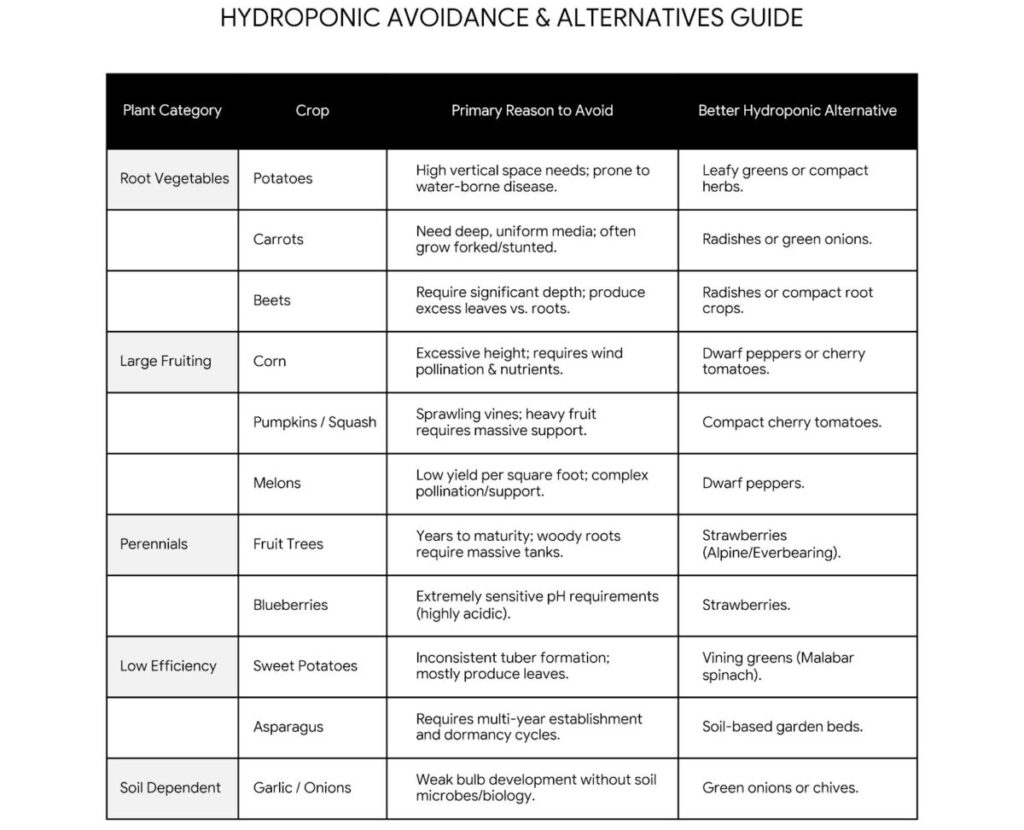
Hydroponic plants to avoid are usually crops that require excessive space, deep root systems, long growing seasons, or highly specific soil interactions that hydroponics cannot easily replicate. The short answer is this: while many plants can survive in hydroponics, not all of them grow efficiently, economically, or practically in a controlled indoor system. Some are simply a poor fit.
This article explains which plants are not well suited for hydroponic growing, why they struggle, and what to grow instead if your goal is reliable yields, low maintenance, and good nutrient density.
Why Some Plants Fail in Hydroponic Systems
Hydroponics removes soil from the equation. That is a strength, but it is also a limitation.
Plants that struggle in hydroponics usually have one or more of these traits:
- Very large or aggressive root systems
- Long time to harvest
- High physical support needs
- Heavy nutrient or potassium demands
- Dependence on soil microbes or mycorrhizae
When those traits stack up, the plant becomes inefficient to grow without soil, especially in small or tabletop systems.
Root Vegetables You Should Avoid Growing Hydroponically
Potatoes
Potatoes are one of the most common mistakes beginners make.
They require:
- Large vertical space for tuber development
- Loose growing media
- Long growth cycles
While commercial aeroponic potato systems exist, they are complex and expensive. For home growers, potatoes are inefficient and prone to disease in water-based systems.
Better alternative: Leafy greens or compact herbs
Carrots
Carrots need deep, uniform growing space to develop properly. In hydroponics, they often become:
- Forked
- Stunted
- Bitter
They are technically possible in deep media beds, but results are inconsistent.
Better alternative: Green onions or radishes in shallow systems
Beets
Beets grow more reliably than carrots, but still require depth and time. In hydroponics, they often produce small roots and excessive leaf growth instead of usable bulbs.
Large Fruiting Plants That Are Poor Fits
Corn
Corn is one of the worst crops for hydroponics.
Reasons include:
- Tall height
- Wind pollination requirements
- Massive nutrient consumption
Even commercial growers avoid hydroponic corn because soil performs better and cheaper.
Pumpkins and Winter Squash
These plants are aggressive growers with sprawling vines and heavy fruit loads. Supporting them indoors requires:
- Trellising
- Large reservoirs
- Constant pruning
The energy cost alone makes them impractical.
Better alternative: Compact cherry tomatoes or dwarf peppers
Melons
Melons face similar problems to squash, with added challenges in pollination and fruit support. Yield per square foot is extremely low in hydroponics compared to soil.
Perennial and Woody Plants That Struggle
Fruit Trees
Fruit trees are not realistic hydroponic crops for home systems.
Issues include:
- Years to maturity
- Woody root systems
- Large container requirements
Hydroponic fruit tree setups exist in research environments, but they are not practical for indoor growers.
Blueberries
Blueberries require very acidic conditions and specific microbial interactions. Maintaining stable pH in hydroponics at those levels is difficult and unstable.
Crops That Technically Grow but Are Not Worth It
Some plants grow in hydroponics but perform poorly compared to soil.
Sweet Potatoes
Sweet potatoes produce vines easily, but tuber formation is inconsistent. Most growers end up with leaves and no usable harvest.
Asparagus
Asparagus takes multiple years to establish and requires dormancy cycles. Hydroponics removes the conditions it relies on.
Plants That Depend on Soil Biology
Certain plants rely on soil ecosystems rather than just nutrients.
These include:
- Garlic
- Onions grown for bulbs
- Leeks
While leafy growth may occur, bulb development is often weak or uneven.
What to Grow Instead for Best Results
If your goal is efficiency and success, hydroponics excels at:
- Lettuce and leafy greens
- Basil, mint, and cilantro
- Spinach and arugula
- Strawberries
- Dwarf tomatoes
- Compact peppers
These crops offer fast harvests, predictable growth, and high nutrient density per square foot.
Final Thoughts
Understanding hydroponic plants to avoid saves time, money, and frustration. Hydroponics is not about growing everything without soil. It is about growing the right plants in the right system.
If you choose crops that match hydroponics strengths, you will see better yields, healthier plants, and a far more enjoyable growing experience.
Expand Your Growing Knowledge
While choosing the right crops is the first step to a successful harvest, protecting them and maximizing their growth is just as important.
- Defend Your System: Now that you know which plants to grow, make sure they stay healthy. Check out our guide on Common Hydroponic Pests to identify and treat the most frequent “uninvited guests” in your water-based garden.
- Grow Better Together: Did you know some plants grow faster and taste better when paired with others? Visit our post on Companion Planting to learn how to arrange your hydroponic setup for maximum efficiency and natural pest deterrence.
- Want to learn about another Hydroponic topic? visit our Resources Page!