Metal Halide (MH) and High-Pressure Sodium (HPS) lights have been around forever in indoor growing. Even with LEDs becoming more common, MH and HPS remain some of the most reliable and predictable lights you can run. They hit hard, penetrate deep, and help plants grow fast when set up correctly.
This guide breaks down everything you need to know about using MH and HPS lights in hydroponic systems — spectra, wattage, heat management, spacing, bulb life, ballast options, reflector types, and common mistakes. If you want a clear, practical explanation instead of vague summaries, you’ve found it.
Want a refresher on hydroponics first? Check out our What is Hydroponics? post.
Why MH and HPS Still Matter
HID lights continue to be popular because they’re consistent. They pull real wattage, deliver predictable results, and don’t come with the guesswork that cheap LEDs sometimes do. MH and HPS produce intense light that drives photosynthesis aggressively — perfect for hydroponic plants.
Even though they use more electricity and produce more heat, their raw growth performance is tough to beat for the price.
Understanding the Difference: MH vs HPS
MH and HPS lights produce very different light spectra, which affects how plants grow. Knowing when and why to use each type is key to a successful hydroponic setup.
Metal Halide (MH)
Spectrum: Bright white/blue
Best stage: Vegetative growth — early to mid-cycle
Effect on plants: Short internodes, dense leaf production, thicker stems
When to use: Seedlings, young plants, early to mid veg
MH mimics spring sunlight, keeping plants compact and helping roots develop strongly. It’s ideal for building a solid foundation before the flowering stage.
High-Pressure Sodium (HPS)
Spectrum: Orange/red
Best stage: Flowering and fruiting
Effect on plants: Boosts bud/fruit development, increases yield
When to use: Late veg → flowering/fruiting
HPS mimics fall sunlight, encouraging plants to focus on reproductive growth. Most growers run MH in veg, then switch to HPS in flower to get the best of both worlds.
“Interactive Setup Guide: Use the calculator below to find your specific hanging height while diving into other detailed lighting info”

Professional Light Distance Tool
Precision optimization based on Light Density (W/ft²) and modern fixture efficiency.
Ballasts: Magnetic vs. Digital
The ballast powers the bulb, affecting efficiency, heat, and lifespan.
Magnetic Ballasts
- Old-school, heavy, reliable
- Run hotter
- Usually cheaper
They work but are bulky and inefficient by today’s standards.
Digital Ballasts
- Quieter and cooler
- More efficient
- Often dimmable (50%, 75%, 100%)
- Compatible with both MH and HPS
Digital ballasts are recommended for most growers unless you already own older equipment.
Reflectors and Hoods
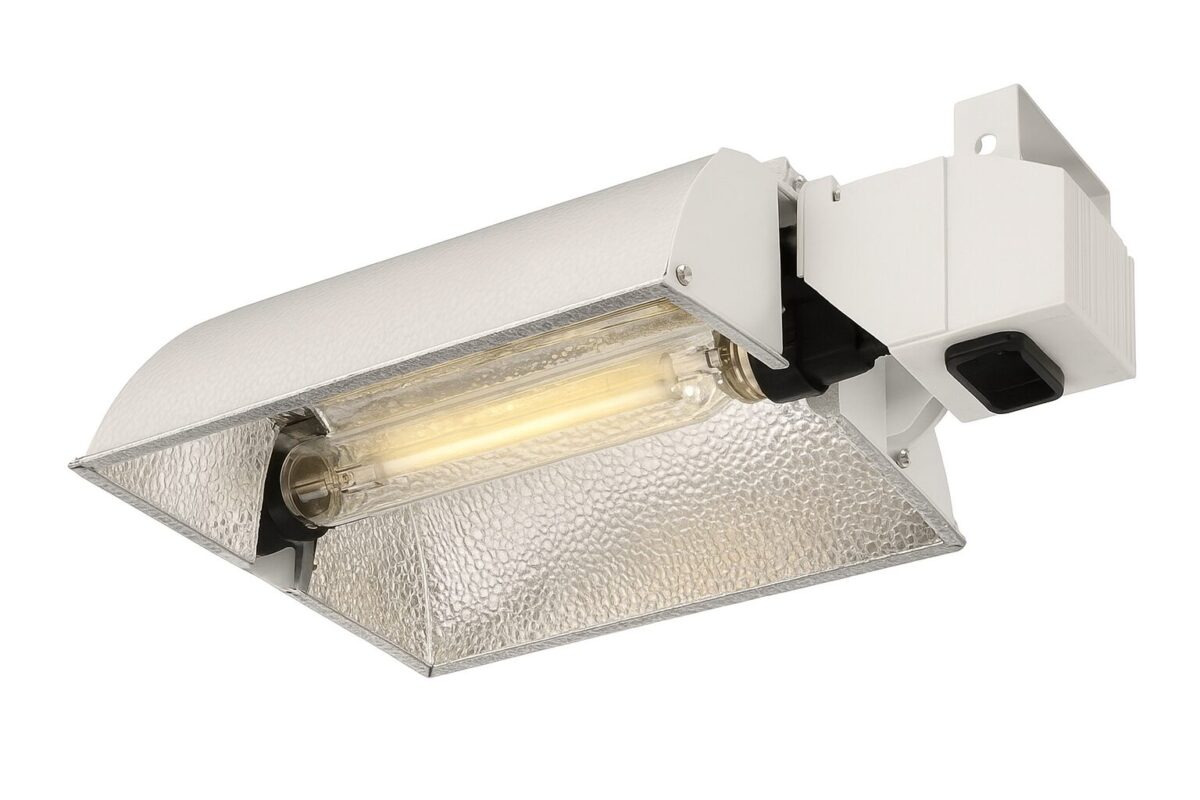
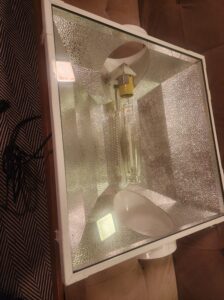
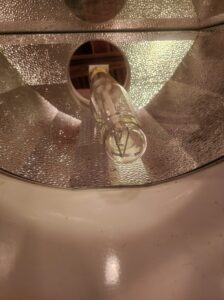
Reflectors control light distribution. A strong bulb in a cheap reflector wastes potential.
Open Reflectors: Basic metal wings, good heat dissipation, wide but less controlled light spread.
Air-Cooled Hoods: Glass-sealed with duct ports, lets you run more wattage safely.
Cool Tubes: Cylindrical glass with ventilation, excellent heat control but narrower spread.
Tip: Some reflectors support dual bulbs or MH ↔ HPS swapping without changing the fixture.
Electrical Requirements & Safety
HID lights pull real wattage, so overloading circuits is dangerous.
600W HID ≈ 5.5 amps on 120V
1000W HID ≈ 9 amps on 120V
Never run over 80% of circuit capacity continuously
Use timers rated for at least 15 amps
Keep ballasts off the floor
Following these basics prevents fires and headaches.
Heat Management
MH and HPS bulbs get hot. Hydroponic plants hate heat stress, so ventilation is key.
Use inline fans with air-cooled hoods
Maintain grow room temps around 70–78°F
Use oscillating fans for leaf movement
Avoid blowing cold air directly onto the bulb
Hotter bulbs degrade faster, so monitoring heat extends efficiency and plant health.
Bulb Lifespan & Replacement
HID bulbs fade over time, even if they still light up.
MH bulbs: Replace every 6–9 months of actual use
HPS bulbs: Replace every 9–12 months
Important: Never touch bulbs with bare hands — oils create hot spots that shorten life or cause failure.
Common Problems & How to Fix Them
Plants Stretching: Light too far or underpowered. Lower fixture or increase wattage.
Leaf Burn: Light too close or canopy too hot. Raise fixture or improve airflow.
Hot Spots: Cheap reflectors cause uneven coverage. Upgrade hood.
Bulb Flickering: Usually ballast-related. Check wiring and compatibility.
Final Thoughts
MH and HPS lights remain dependable for hydroponics. Run them safely, manage heat, keep bulbs clean, and pair with a good reflector — they’ll outperform many budget LEDs.
Use MH for vegetative growth, HPS for flowering
Size wattage to your grow space
A simple, well-managed HID setup is still one of the most straightforward ways to grow fast indoors
Need help choosing the right hydroponic system? Try our Hydroponic System Selector Tool.