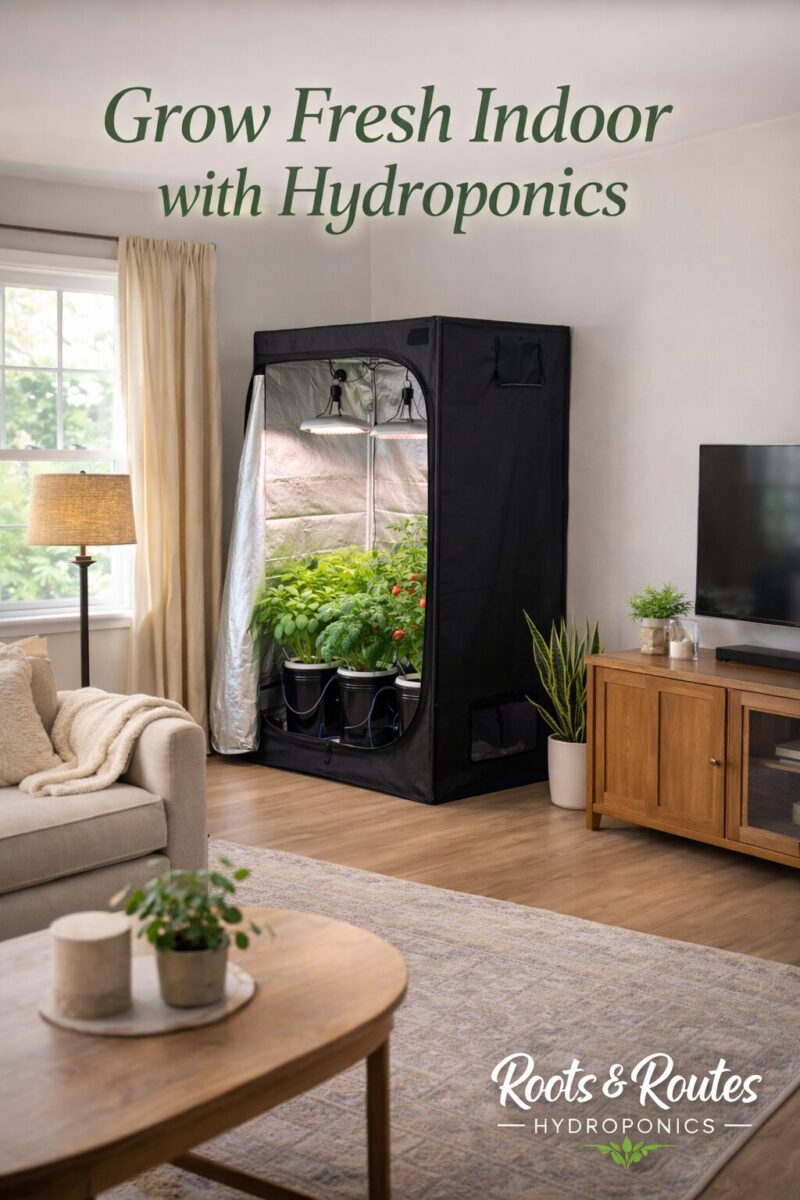
If you’re ready to take your indoor gardening to the next level, hydroponic grow tent systems are an ideal choice. Unlike compact tabletop or small tower setups, grow tents provide a controlled environment that can support multiple plants, larger harvests, and a wider variety of crops. Even smaller grow tents are generally much larger than tabletop units and some tower systems, giving you the space needed for a productive indoor garden.
Grow tents are perfect for hobbyists or semi-serious growers who want more consistent yields from herbs, leafy greens, and fruiting plants without dedicating an entire room. In this article, we’ll explain how grow tent systems work, their benefits and limitations, practical setup guidance, common mistakes to avoid, and how to use our Hydroponic System Selector tool to choose the right setup.
How Hydroponic Grow Tent Systems Work
Hydroponic grow tents create a self-contained, lightproof environment that allows you to control temperature, humidity, and light. When combined with hydroponic systems such as DWC, NFT, or Ebb & Flow, tents provide everything your plants need to thrive indoors.
Key Components
Tent enclosure: Reflective interior walls optimize light distribution and airflow.
Hydroponic system: Can be DWC, NFT, Ebb & Flow, or even small tower systems inside the tent.
Grow lights: Full-spectrum LEDs or HID lights mounted above plants.
Ventilation: Intake and exhaust fans to control temperature, humidity, and airflow.
Monitoring equipment: Hygrometers, thermometers, and timers or controllers for lights and fans.
Step-by-Step Setup Overview
Choose a tent size appropriate for your space and number of plants. Common sizes range from 2×2 feet up to 5×5 or larger.
Set up your hydroponic system inside the tent according to manufacturer instructions.
Install grow lights and adjust height as plants grow.
Connect ventilation and monitor temperature and humidity.
Fill reservoirs with water and nutrients, then start your light schedule.
Check plants regularly, prune as needed, and harvest when mature.
Even “small” grow tents are typically several times larger than tabletop units, accommodating multiple plants and larger harvests.
Benefits and Limitations
Benefits
Controlled environment: Optimize temperature, humidity, and light for consistent growth.
Higher yields: Space allows multiple plants or larger crops.
Flexibility: Supports different hydroponic systems and plant types.
Indoor protection: Shields plants from pests and environmental fluctuations.
Limitations
Space requirements: Even small tents need dedicated floor space.
Setup complexity: More equipment to install, including lights and ventilation.
Maintenance: Requires regular attention to nutrients, water levels, and environmental conditions.
Electricity use: Fans, lights, and pumps can increase energy consumption.
Setup Guidance: Space, Plants, and Maintenance
Choosing the Right Tent Size
For beginners or small-space growers, a 2×2 or 2×4-foot tent is manageable and still produces a healthy harvest. Larger tents, like 4×4 or 5×5 feet, allow multiple hydroponic systems or mature fruiting plants. Consider ceiling height, door access, and ease of maintenance when selecting a size.
Ideal Plants for Grow Tent Systems
Leafy greens: Lettuce, kale, spinach
Herbs: Basil, parsley, cilantro, oregano
Fruiting plants: Cherry tomatoes, mini peppers, strawberries
Microgreens and sprouts for fast harvest cycles
Maintenance Tips
Check nutrient solution levels and pH regularly; refill reservoirs as needed.
Monitor temperature and humidity daily, adjusting fans and vents accordingly.
Prune plants to maintain airflow and prevent overcrowding.
Clean the tent interior and hydroponic components between crops to prevent mold and algae.
Adjust grow lights as plants grow to prevent stretching or leaf burn.
Common Mistakes to Avoid
Choosing a tent too small for your planned crop load.
Poor ventilation causing heat buildup or high humidity.
Overcrowding plants, which reduces yields and increases disease risk.
Neglecting regular monitoring of water, nutrients, and pH.
Failing to clean equipment, leading to mold, algae, or root rot.
Addressing these issues early ensures healthy growth and a productive indoor garden.
Which Grow Tent System is Right for You?
If you’ve ever wanted a more productive indoor garden without dedicating a whole room, our Hydroponic System Selector tool can help. Enter your available space and preferred system type, and it will guide you to the grow tent systems that match your goals and plant choices. It’s the easiest way to plan a tent setup that fits your lifestyle and maximizes yield.
Conclusion
Hydroponic grow tent systems are perfect for growers ready to move beyond small tabletop or tower setups. They provide a controlled, versatile environment that supports higher yields and a wider variety of plants. By selecting the right tent size, maintaining proper environmental conditions, and following consistent hydroponic practices, you can enjoy a productive indoor garden year-round. Use our Hydroponic System Selector tool to find the system that fits your space and gardening goals.