
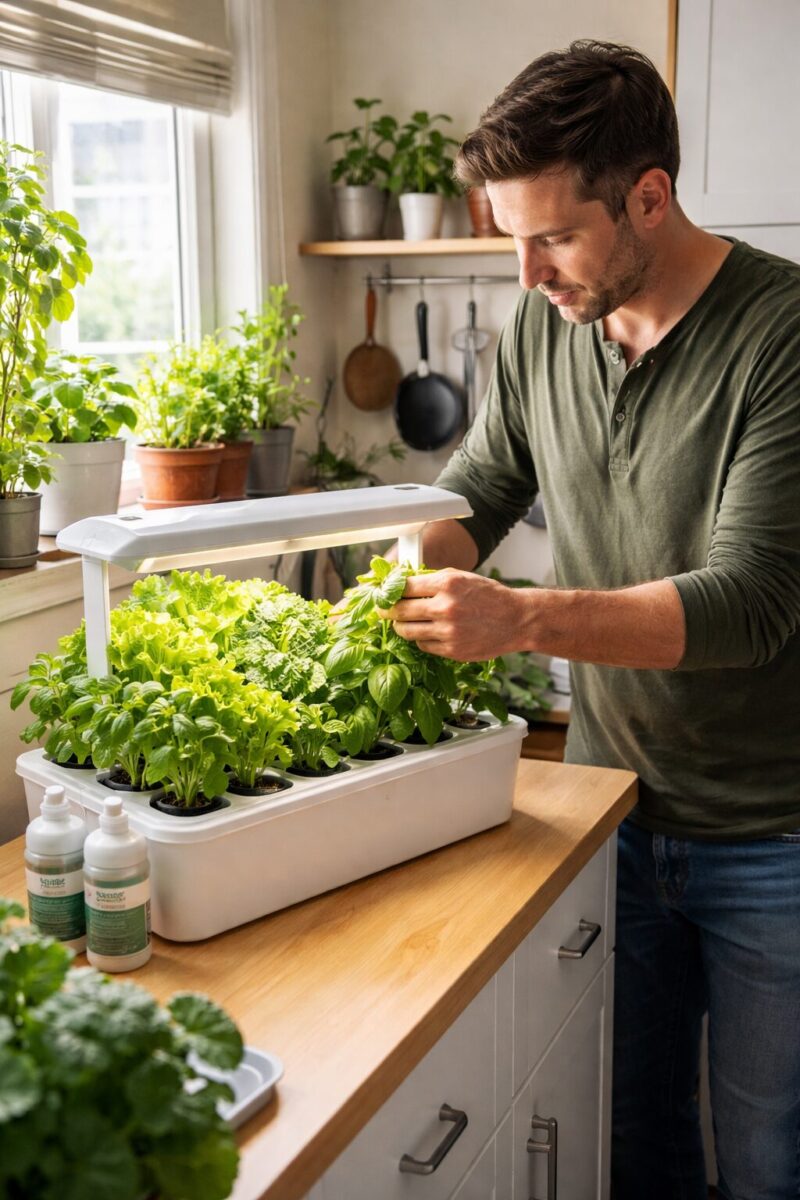
Most hydroponic advice assumes you have room to experiment. Extra buckets, backup reservoirs, space to isolate problems. That’s not how it works for most people growing in apartments, spare rooms, or small tents. When space is tight, mistakes show up faster and cost more to fix even when Growing Hydroponically.
The good news is that small hydroponic systems don’t need to be complicated to work well. They just need to be set up with stability in mind instead of perfection.
Stability beats precision in small systems
One of the biggest misconceptions with hydroponics is that success comes from dialing in perfect numbers. Exact EC targets. Ideal pH ranges. Constant adjustment. In reality, small systems tend to suffer more from chasing numbers than from running slightly imperfect ones.
When your reservoir only holds a few gallons, even a small adjustment can swing things too far. A top off, a nutrient correction, or a temperature change can push plants into stress faster than you expect. I’ve seen more issues caused by over correction than by letting a system run a little off target for a day or two.
What works better is consistency. Mixing nutrients the same way every time. Topping off on a schedule instead of reactively. Letting plants tell you when something is actually wrong instead of responding to every meter reading.
If growth is steady and leaves look healthy, that usually matters more than hitting textbook values daily.
System choice matters more than most guides admit
Not all hydroponic systems behave the same in tight spaces, even if they look similar online. Some designs are simply less forgiving when something goes wrong.
Deep Water Culture systems are popular because they’re simple, but in small reservoirs they can heat up quickly and lose oxygen faster than expected. That doesn’t mean they’re bad, but it does mean airflow and water temperature matter more than beginners are often told.
Wick systems and passive setups tend to get dismissed as “too basic,” yet they’re often more stable for small grows because they change slowly. That slower response can be a good thing when you’re learning or don’t want to babysit a system every day.
The right choice isn’t about what grows fastest. It’s about what stays predictable in the space you actually have.
For growers dealing with tight spaces and limited time, a compact, automated system can make a real difference. The LetPot Max is designed for small setups, with automated nutrient and water delivery, app-based monitoring, and a small footprint. It helps maintain consistency without daily manual adjustments, making it easier to keep plants healthy—even when you’re short on time or traveling briefly.
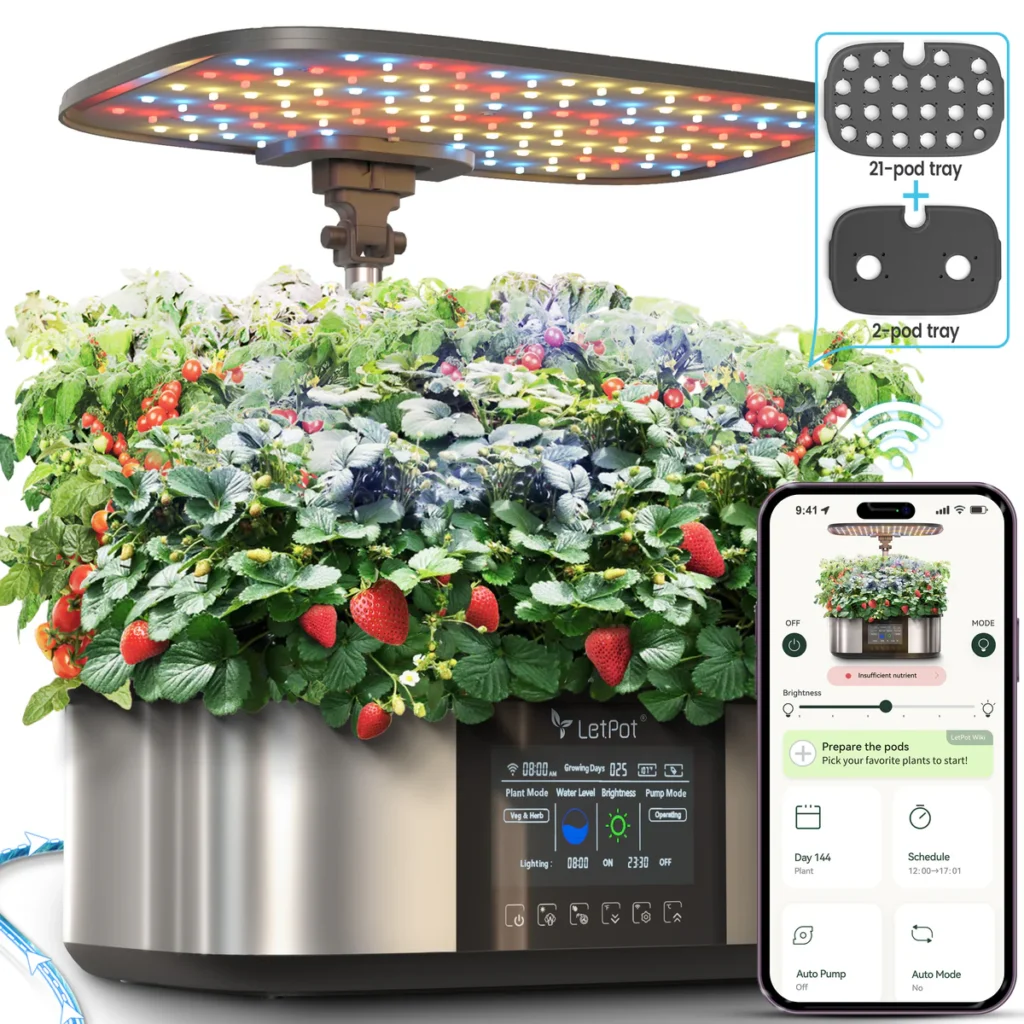
LetPot Max
- Auto Care & Nutrition: Automated water & nutrient delivery for steady, healthy growth.
- Capacity & Light: 21 pods + 36 W full-spectrum LED.
- Smart Control: Touchscreen + mobile app for easy monitoring.
Purchasing through this link supports the site at no extra cost.
If your struggling to fit a hydroponic system in a small space, use our System Selector Tool to find a recommended system that fits your space and needs instantly.
Light intensity is easier to overdo than underdo
Lighting is another area where small spaces behave differently. Strong grow lights can absolutely boost growth, but only if heat and distance are managed properly. In a cramped area, it’s easy to push light intensity past what plants can comfortably use.
When leaves start curling upward or bleaching slightly, the instinct is often to blame nutrients. In small setups, it’s just as often light stress combined with limited airflow.
Backing the light off a few inches or slightly reducing intensity often fixes problems faster than adjusting feed schedules. Plants recover quicker from mild nutrient imbalance than from sustained light stress.
This is one of those situations where “more powerful” isn’t automatically better.
Nutrients don’t need to be exotic to work well
It’s tempting to think better results require more complex nutrient lines. Multiple bottles. Additives. Supplements for every growth stage. In practice, small systems benefit from simplicity.
Fewer components mean fewer variables. When something looks off, it’s easier to diagnose. When mixing becomes routine, consistency improves. That alone prevents a lot of problems before they start.
Most plants don’t fail because they lacked a booster. They struggle because nutrient strength drifted, pH bounced, or water quality wasn’t stable long enough for roots to settle in.
A solid base nutrient used consistently will outperform a complicated regimen that changes every week.
Airflow quietly solves a lot of problems
Airflow doesn’t get the attention it deserves in small hydroponic grows. Not just exhaust, but gentle movement around the plants themselves.
Good airflow helps regulate leaf temperature, strengthens stems, and reduces moisture buildup that leads to disease. In tight spaces, even a small fan positioned correctly can make the difference between constant minor issues and smooth growth.
This is one of those upgrades that doesn’t feel exciting but pays off immediately.
Small systems reward patience more than tweaking
Probably the hardest adjustment for new growers is learning when not to intervene. Small systems react quickly, but they also recover quickly if you stop chasing every fluctuation.
If plants are growing, roots look healthy, and there’s no visible damage spreading, the best move is often to wait. Let the system settle. Let the plants respond.
Hydroponics in small spaces isn’t about control. It’s about restraint.
Final thoughts
You don’t need a perfect setup to grow successfully in a small space. You need a stable one. The systems that perform best over time are usually the ones that change the least day to day.
If there’s one takeaway here, it’s this: build a setup that forgives small mistakes. That matters more than optimizing every variable.
Plants are more adaptable than most people give them credit for. Your job is mainly to avoid stressing them out.
Want to dive deeper into hydroponics and discover all our tips, tricks, and detailed guides? Explore our full collection of resources here.