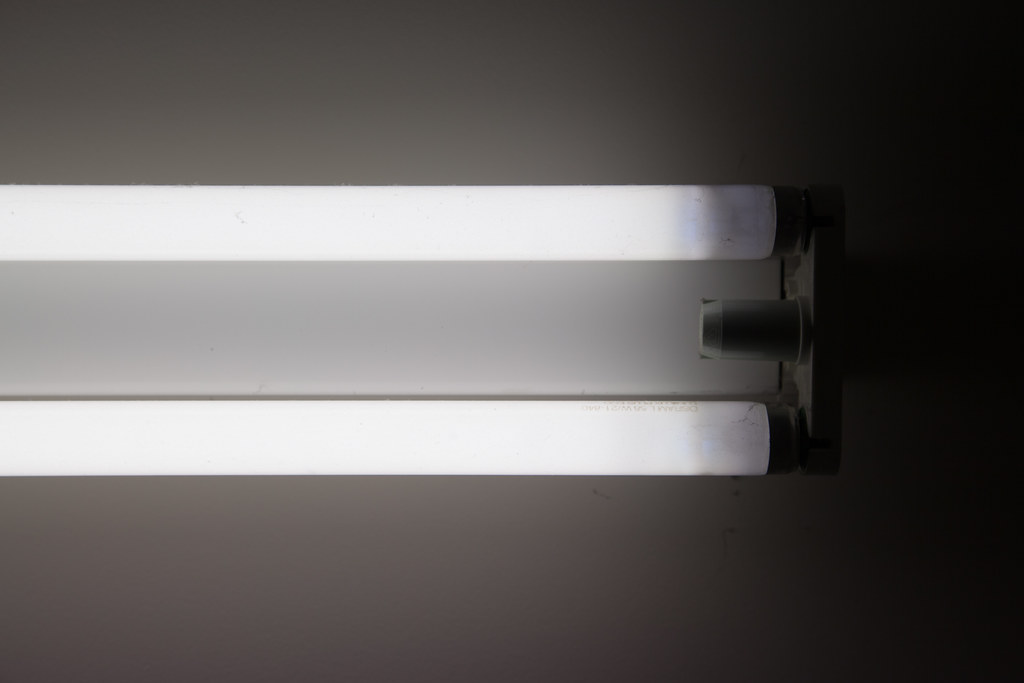
Fluorescent lights aren’t the industry standard anymore, but they haven’t been pushed into extinction. In the right applications, they’re still one of the most reliable, low risk lighting options you can use in a hydroponic garden. They provide even coverage, gentle heat, and a forgiving intensity that’s perfect for growers who need consistency without the cost or heat management of LED arrays.
This guide breaks down where fluorescent lighting still makes sense in 2025, which types growers actually use today, what plants thrive under them from start to finish, and how to set them up correctly for hydroponic systems.
Learn more about types of Hydroponic Lighting <Here
Why Fluorescent Lights Still Matter in 2025
Low Heat Output
Fluorescent fixtures stay cool compared to almost every other light source. This makes them ideal for tight grow spaces, stacked shelving systems, and any setup where seedlings or delicate greens need light without heat stress.
Even, Wide Coverage
Fluorescent tubes spread light smoothly across trays and tables. This is especially useful for microgreens, herbs, and leafy greens that grow in uniform rows or trays. There are no hotspots or sharp drop-offs, which makes management easier for beginners.
Budget-Friendly Setup
Fixtures and bulbs are inexpensive, and growers with basic DIY skills can easily mount or retrofit these lights in shelves, closets, or small grow racks. Many people already have fluorescent fixtures at home from workshops or garages — they can be repurposed without spending much.
Types of Fluorescent Lights Still Used Indoors
T5HO (High Output T5)
This is the most effective fluorescent option still widely used by indoor growers. T5HO lights produce enough output for leafy greens, herbs, microgreens, and starter plants. They’re efficient for fluorescent standards and maintain consistent brightness across long fixtures.
Best uses:
- Seedlings and clones
- Leafy greens
- Basil, mint, parsley, cilantro
- Microgreens
- Hydroponic herb gardens
T8 Tubes
T8 fixtures are weaker than T5HO but cost very little and run extremely cool. Tons of growers repurpose old shop lights for sprouts, microgreens, and propagating herbs before transferring them to stronger lighting.
Best uses:
- Sprouts
- Microgreens
- Seed starting
- Low-light herbs
CFL Bulbs (Compact Fluorescents)
CFL bulbs still show up in tiny grow boxes, kitchen hydroponic jars, and desktop systems where space is tight. They’re not strong enough for large systems, but for one or two plants, they get the job done.
Best uses:
- Supplemental lighting
- One-plant miniature hydro setups
- Countertop greens and herbs
What You Can Grow from Start to Finish Under Fluorescents
Fluorescents won’t support fruiting crops like tomatoes, peppers, or cucumbers, but they excel at low and medium light plants. Many hydroponic growers run full cycles using only T5HO fixtures.
Ideal Fluorescent Crops
- Microgreens
- Sprouts
- Lettuce
- Bok choy
- Basil, mint, chives
- Cilantro and parsley
Crops That May Work Under Strong T5HO
- Swiss chard
- Dwarf greens
- Baby kale
These plants thrive because they grow flat, shallow, and don’t require intense vertical light penetration.
Why Fluorescents Fit Hydroponics So Well
Propagation Success
Fluorescents are almost tailor made for seedlings and clones. They provide gentle light that encourages early root and leaf development without stressing young plants.
Microgreen Racks
Many microgreen growers still prefer fluorescent racks because the even horizontal spread perfectly matches tray layouts. LEDs often create bright center zones with weaker edges unless you buy higher-end bars.
Shelf and Closet Hydroponics
If you’re growing in a closet, cabinet, or small room. Especially one with white walls, fluorescents give you straightforward, manageable light without overheating the space.
Fluorescents vs LEDs in Modern Hydroponics
LEDs outperform fluorescents in efficiency, lifespan, and intensity. But fluorescents still dominate in specific roles where uniform low-intensity lighting is better than power:
- Seedling trays
- Cloning stations
- Microgreens
- Budget builds
- Older grow racks already set up for fluorescent fixtures
Fluorescents aren’t competing with LEDs anymore — they’re simply used where LEDs are overkill or too directional.
Proper Distance and Setup
Fluorescents need to sit close to the plant canopy because they lose intensity quickly with distance.
| Light Type | Optimal Distance |
| T5HO | 4 – 8 inches |
| T8 | 6 – 10 inches |
| CFL | 2 – 6 inches |
Keep the lights level and close. If the fixture warms up slightly, that’s usually an advantage for early plant development.
Pros and Cons of Fluorescent Lighting
Advantages
- Good for beginners
- Low heat generation
- Very even canopy coverage
- Excellent for propagation
- Safe and forgiving
- Budget-friendly
Disadvantages
- Not suitable for high light or fruiting crops
- Lower efficiency than LEDs
- Bulbs need periodic replacement
- Large fixtures compared to modern LED bars
Who Should Use Fluorescent Lights?
They’re ideal if you’re growing herbs, greens, sprouts, or microgreens, running a propagation area, building a budget system, or working in a warm or enclosed environment where heat buildup is a problem.
For many growers, fluorescents are still the simplest, smoothest, and most stable lighting option for early growth and leafy produce.