
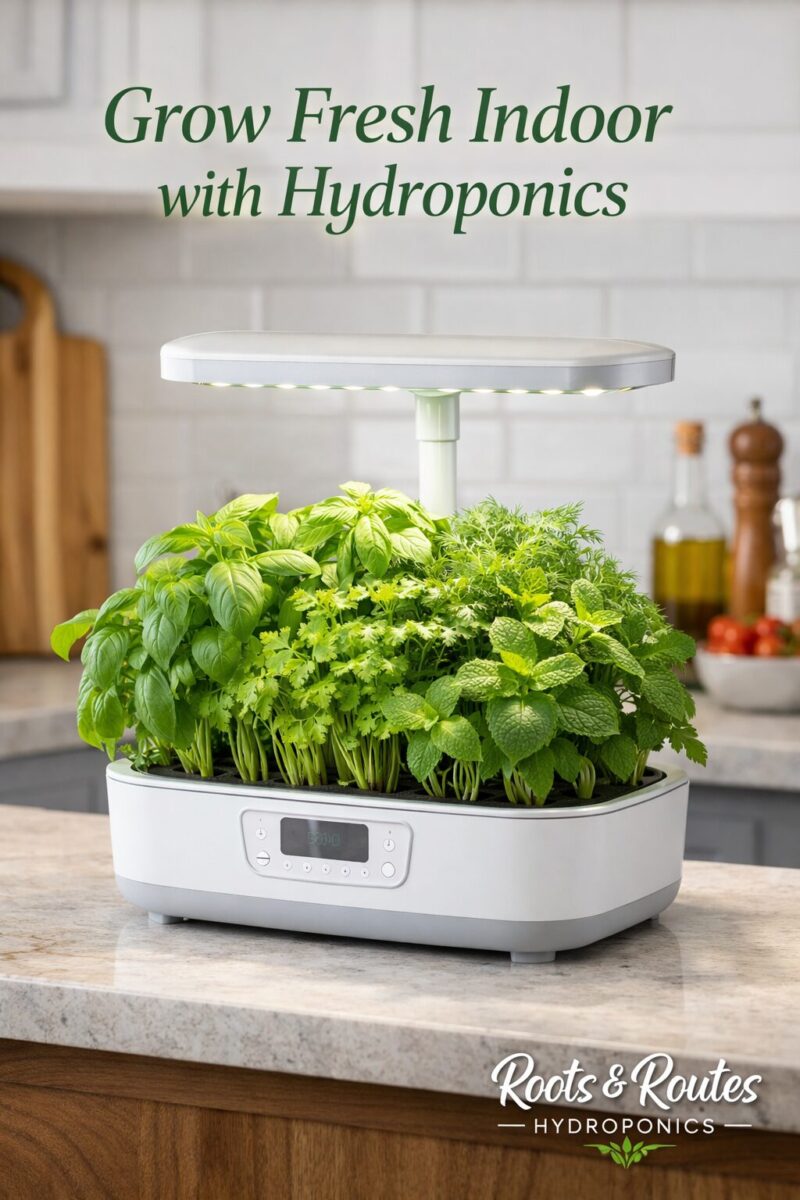
For indoor gardeners looking to grow fresh herbs, leafy greens, or even small fruiting plants in a limited space, compact tabletop hydroponic systems are an ideal solution. These all-in-one units—often seen in popular brands like Aerogarden—combine automated watering, lighting, and nutrient delivery, making them perfect for beginners and hobbyists alike.
Whether you’re starting on a kitchen counter, an apartment balcony, or a small office space, tabletop hydroponic setups let you enjoy homegrown greens year-round without soil, heavy maintenance, or complicated setups. In this article, we’ll cover how tabletop systems work, their benefits and limitations, practical setup tips, common mistakes to avoid, and example products. By the end, you’ll know if a compact tabletop hydroponic system is right for your space and goals.
How Compact Tabletop Hydroponic Systems Work
At their core, tabletop hydroponic systems are self-contained, soil-free growing units that provide plants with everything they need to thrive. Unlike traditional hydroponic setups with separate reservoirs, pumps, and lighting, these systems integrate all essential components into one compact design.
Key Components
Water reservoir: Holds water and nutrients, keeping plants hydrated between refills.
Grow lights: Built-in LEDs provide the proper spectrum and intensity for photosynthesis.
Plant pods: Pre-seeded or customizable pods in net cups above the reservoir.
Pumps and aeration: Circulate water and oxygenate the nutrient solution for healthy roots.
Control panel: Simple interface to monitor water, light cycles, and nutrient reminders.
Step-by-Step Setup
Fill the reservoir with water and a balanced hydroponic nutrient solution.
Insert plant pods into the designated slots above the water.
Set the LED lights on an automatic schedule (typically 14–16 hours/day).
Check water and nutrient levels periodically; refill as needed.
Harvest mature plants, usually within 4–8 weeks for herbs and greens.
These systems handle much of the routine maintenance for you, letting beginners and intermediate gardeners focus on enjoying the growth process. Many even include smart features or apps to simplify monitoring.
Benefits and Limitations
Benefits
Space-efficient: Fits on counters, desks, or small shelves.
Beginner-friendly: Automated lighting, watering, and nutrients reduce complexity.
Year-round growing: Indoor setup means fresh herbs anytime.
Quick harvests: Leafy greens and herbs mature in under two months.
Clean and low-maintenance: No soil, minimal mess, easy cleanup.
Limitations
Plant size restrictions: Best for small herbs, greens, and dwarf fruiting plants.
Limited expansion: Tabletop units are generally fixed in size.
Maintenance required: Automated doesn’t mean maintenance-free; water and nutrient levels must be monitored.
Setup Guidance: Space, Plants, and Maintenance
Choosing the Right Space
Tabletop hydroponic systems need a stable, flat surface with access to electricity. Popular spots include kitchen counters, windowsills (built-in LEDs reduce sunlight dependency), or small office spaces. Avoid high-traffic areas to prevent tipping or spills.
Ideal Plants for Tabletop Systems
Leafy greens: Lettuce, spinach, kale
Herbs: Basil, parsley, cilantro, mint, chives
Small fruiting plants: Dwarf cherry tomatoes, mini peppers
Microgreens and sprouts for quick harvests
Maintenance Tips
Refill water and nutrients every 1–2 weeks.
Trim plants to prevent overcrowding and maintain airflow.
Clean the reservoir and pods between harvests to avoid algae or root rot.
Keep lights on a consistent schedule; most systems include automatic timers.
Monitor pH occasionally; most leafy greens prefer 5.5–6.5.
Common Mistakes to Avoid
Overcrowding pods, limiting growth and airflow.
Neglecting nutrient levels or topping up with plain water too often.
Ignoring root health—roots should be white and healthy.
Skipping regular cleaning—algae and mold can develop quickly.
Relying solely on natural light—built-in LEDs ensure consistent growth.
Which Tabletop System is Right for You?
If you want to enjoy fresh herbs and greens at home but aren’t sure which tabletop system fits your space best, our Hydroponic System Selector tool can help. Enter your ideal size and preferred system type, and it will recommend the setups that match your goals—making it simple to start growing with confidence.
Top Tabletop Pick: LetPot Max
If you’re looking for a top-performing tabletop hydroponic system, the LetPot Max is our go-to pick. It combines automation, smart control, and compact design to make growing nutrient-rich plants easy, even in small spaces or busy homes. With automatic water and nutrient dosing, a full-spectrum LED, and app-based monitoring, it’s ideal for anyone who wants consistent results without daily guesswork.
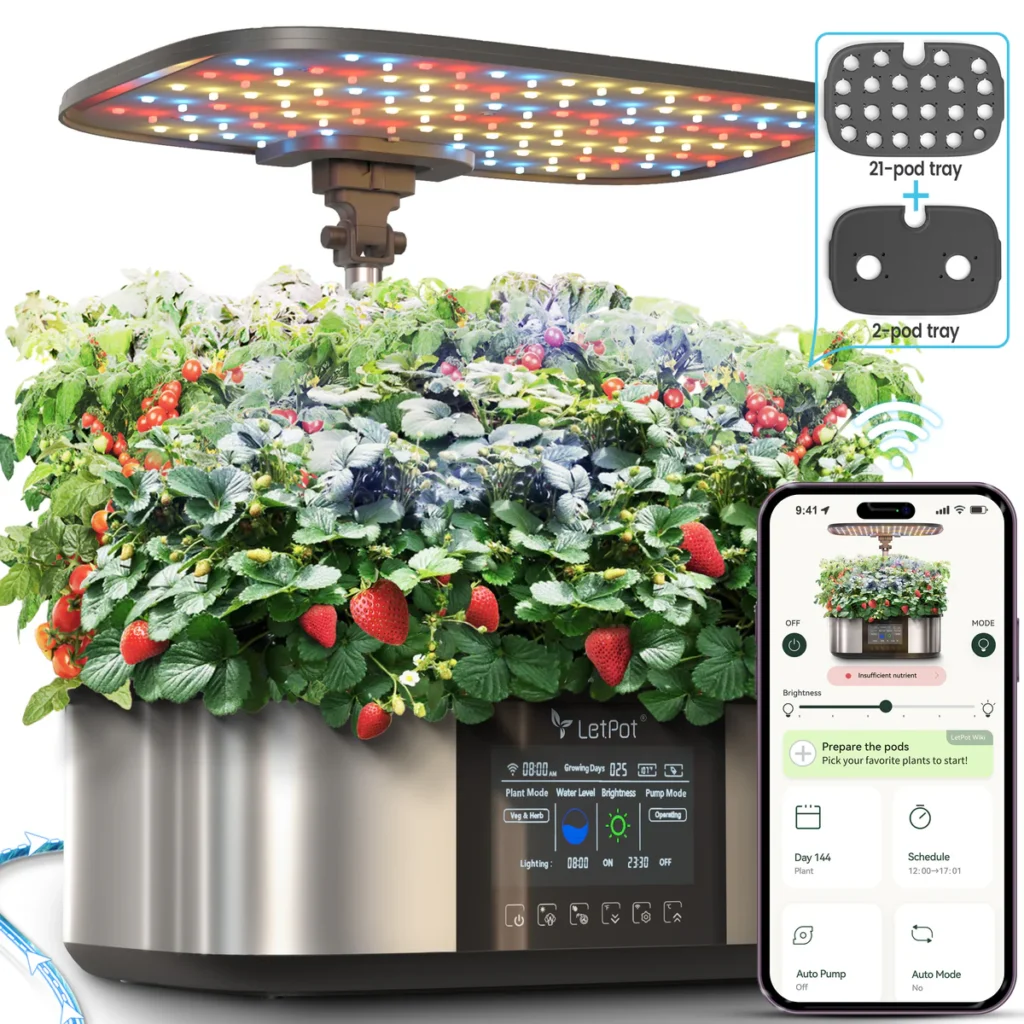
LetPot Max
- Auto Care & Nutrition: Automated water & nutrient delivery for steady, healthy growth.
- Capacity & Light: 21 pods + 36 W full-spectrum LED.
- Smart Control: Touchscreen + mobile app for easy monitoring.
Purchasing through this link supports the site at no extra cost.
Conclusion
Compact tabletop hydroponic systems are the perfect introduction to indoor gardening, offering a clean, efficient, and low-maintenance way to grow herbs and greens. By understanding how the system works, selecting the right space, and following maintenance best practices, beginners and intermediate growers can enjoy a productive, rewarding hydroponic experience. Use our Hydroponic System Selector tool to find the setup that fits your space and growing goals.