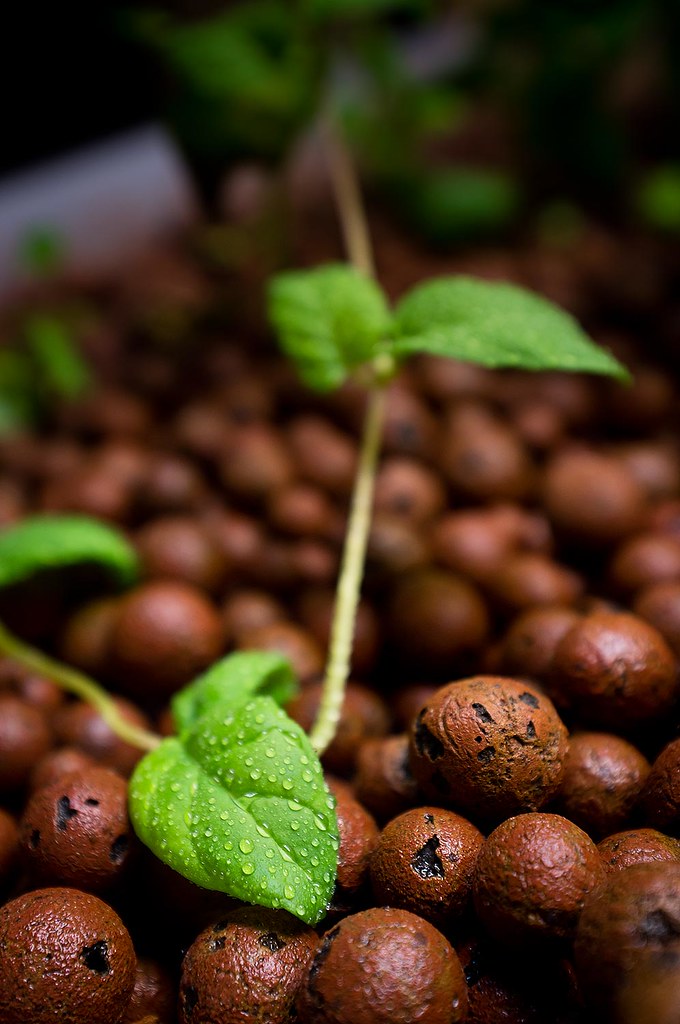
Clay pebbles, also known as Hydroton, are among the most widely used hydroponic growing mediums. Lightweight, porous, and chemically inert, they provide excellent aeration and drainage for roots while maintaining a neutral pH. Understanding how to use them effectively can make a significant difference in plant health, root development, and overall yield.
For a comprehensive overview of all hydroponic growing mediums, visit our Growing Mediums page.
What Are Clay Pebbles?
Clay pebbles are made by firing natural clay at extremely high temperatures, causing it to expand and form small, round, porous balls. The firing process sterilizes the medium and creates air pockets that provide roots with oxygen while allowing excess water to drain freely. Each pebble is lightweight yet stable enough to support plants in a variety of hydroponic systems.
The manufacturing process ensures that Hydroton is free from pathogens and chemicals. This makes it a reliable option for both beginners and advanced growers who want a safe, reusable medium that minimizes the risk of disease.
Why Growers Use Clay Pebbles
Clay pebbles offer several advantages that make them a favorite for many hydroponic setups:
| Feature | Benefit |
|---|---|
| Excellent Drainage | Prevents waterlogging, reducing the risk of root rot. |
| Air Retention | Porosity allows roots to access oxygen efficiently, supporting healthy growth. |
| Neutral pH | Does not affect nutrient solution pH, allowing precise control. |
| Lightweight & Reusable | Easy to handle, move, and clean for multiple grow cycles. |
| Compatibility | Works with most hydroponic systems, including Ebb & Flow, DWC, NFT, and aeroponics. |
How to Use Clay Pebbles Effectively
Before using, rinse the pebbles thoroughly to remove dust and small particles. Many growers also soak them in pH-balanced water to ensure they do not initially alter nutrient solution chemistry. Clay pebbles can be used in seed-starting trays, net pots, and system trays, making them extremely versatile.
In Ebb & Flow systems, they provide support while allowing water to flood and drain efficiently. In NFT and DWC systems, they stabilize seedlings until roots reach the nutrient solution. Even compact or vertical setups benefit from Hydroton’s lightweight and porous structure.
Tips for Optimal Use
– Rinse and soak pebbles before first use to remove dust and ensure neutrality.
– Use a mesh or liner at the bottom of containers to prevent pebbles from falling into pumps or drains.
– Monitor water levels closely; while Hydroton drains well, stagnant water can still occur in poorly designed systems.
– Sterilize and reuse pebbles between cycles to reduce the risk of pathogens and algae.
Clay Pebbles Compared to Other Mediums
| Medium | Drainage | Aeration | pH Stability | Reusability |
|---|---|---|---|---|
| Clay Pebbles | Excellent | Excellent | Neutral | Yes |
| Rockwool | Good | Moderate | Slightly Acidic | Limited |
| Coco Coir | Good | Good | Slightly Acidic | Yes |
| Perlite | Excellent | Good | Neutral | Yes |
See our full guides on Coco Coir and Rockwool for additional medium options and comparisons.
Potential Drawbacks
While versatile, clay pebbles have some considerations. They do not retain nutrients, so the nutrient solution must be carefully maintained. Small containers may allow pebbles to shift, leaving seedlings unstable. Regular cleaning and sterilization are required to prevent algae and pathogen growth.
Summary
Clay pebbles (Hydroton) are a highly versatile hydroponic medium, offering excellent drainage, aeration, and pH neutrality. They are reusable and compatible with most hydroponic systems, from DIY setups to pre-built kits. Proper preparation, maintenance, and system-specific placement ensure healthy roots, optimal nutrient uptake, and robust plant growth.
Questions & Answers
Q: Can I reuse clay pebbles?
A: Yes, after rinsing, sterilizing, and drying between grow cycles.
Q: Do they affect pH?
A: No, they are neutral and allow precise nutrient management.
Q: Are they suitable for small-space setups?
A: Yes, lightweight and stable, perfect for compact or vertical systems.
Q: Can seedlings be grown in Hydroton?
A: Yes, they stabilize young plants until roots reach the nutrient solution.