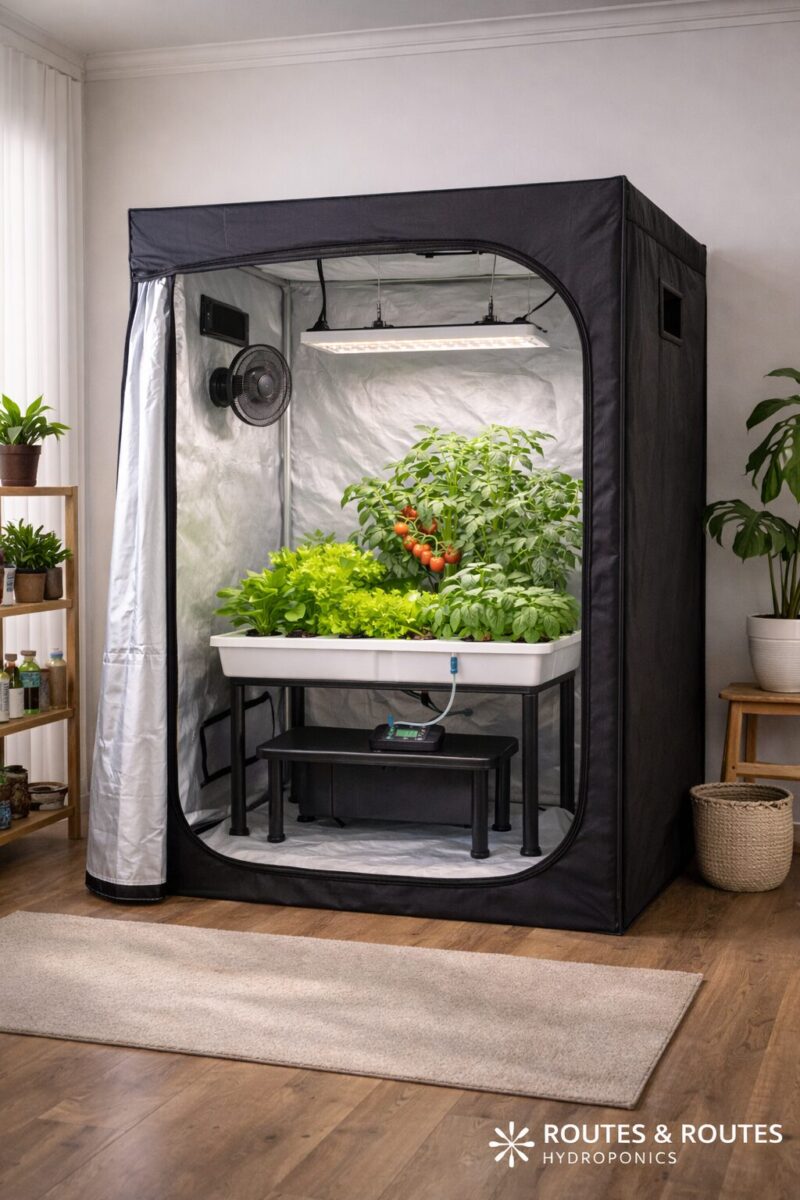
After talking about small spaces, the next challenge is figuring out medium-sized hydroponic setups and systems. Maybe you’ve got a corner in a garage, a dedicated spare room, or a balcony that can fit a bit more than a tabletop system. The tricky part is balancing productivity without introducing constant headaches.
Why medium isn’t “just bigger small”
It’s tempting to think a slightly larger tank or bigger tent will magically fix all the problems you had in a cramped space. In reality, medium setups come with their own quirks. Water volume can help stabilize nutrients, but airflow, lighting, and plant density suddenly become more critical. One miscalculation, and you might find your plants stretched, shaded, or fighting over oxygen.
System behavior in medium setups
From my experience, systems like Deep Water Culture start to behave differently once you’re past a tabletop setup. Reservoirs don’t fluctuate as wildly, which is nice, but they can develop temperature pockets if lights or heaters aren’t balanced. Flood-and-drain tables can be forgiving, but pump failures or uneven flow show up fast. The lesson: don’t assume stability just because you have more space.
Airflow and temperature: easy to overlook, hard to fix
Medium spaces can hide airflow issues. Plants might look healthy until you notice lower leaves yellowing or tips curling. Often, it’s just pockets of stagnant air combined with heat from lights. A small oscillating fan or moving intake vent can prevent that. Unlike small systems where a single fan can cover everything, medium setups may require a little more strategy.
Light placement matters more than wattage
It’s easy to assume that just cranking up the light will speed up growth. In medium setups, I’ve seen too many people scorch leaves or stress plants with uneven coverage. The trick isn’t always intensity—it’s distribution. Raising lights a few inches or staggering them to cover shadows often gives better results than blasting everything at full power.
Nutrients and monitoring
Medium systems can handle a bit more variation, but don’t take it as permission to “wing it.” Consistency still wins. Use your standard nutrient mix, monitor EC and pH like you normally would, and don’t overcomplicate things. Medium setups give room to experiment, but mistakes are still costly if you overload your system or overfeed plants.
Patience pays off
You might feel tempted to tweak everything—every light, every fan, every nutrient solution. In my experience, stepping back and letting the system find its balance usually yields better growth. Plants respond to stability. The medium size just gives them more room to adapt, not immunity to stress.
Making the choice easier
If you’re weighing multiple medium options, I’ve found that systems with predictable, steady behavior are easier to manage. Something that responds gradually to changes—like a well-designed ebb-and-flow or flood table—will save you more headaches than chasing the “fastest growth” setup. For those interested, our Hydroponic System Selector Tool can help match a system to your space and goals without the guesswork.
Final thoughts
Medium hydroponic systems are a sweet spot for people who want more than a tabletop setup but aren’t ready to dedicate an entire room. The keys are stability, thoughtful airflow, careful lighting, and patience. Build your setup around predictability, not perfection, and your plants will thrive without constant stress.
For more detailed guidance on different setups, nutrients, and growing techniques, check out our Resources Page and our Home Page. They share all the practical advice we’ve gathered to help your plants succeed in any space.