Short answer: yes, but not the way most people hope.
I’m not saying that to be negative. I’m saying it because I’ve watched a lot of people waste time, money, and enthusiasm chasing an idea that only half works. If you live in an apartment, rent your place, or just don’t want your home glowing like a spaceship, this question is completely reasonable.
So let’s talk about what actually works, what doesn’t, and why the internet keeps lying about it.
What “Without Grow Lights” Really Means
When people say “without grow lights,” they usually mean one of three things:
- Window light only
- Bright room, no direct sun
- Whatever light happens naturally in the space
Those are very different situations.
A south-facing window in summer is not the same as a north-facing apartment in winter. Latitude, season, window size, buildings outside, and even dirty glass all matter. Plants don’t care what we intend. They respond to photons. If the light isn’t there, growth slows or stops.
That’s the baseline reality.
Vegetables You Can Grow Without Grow Lights
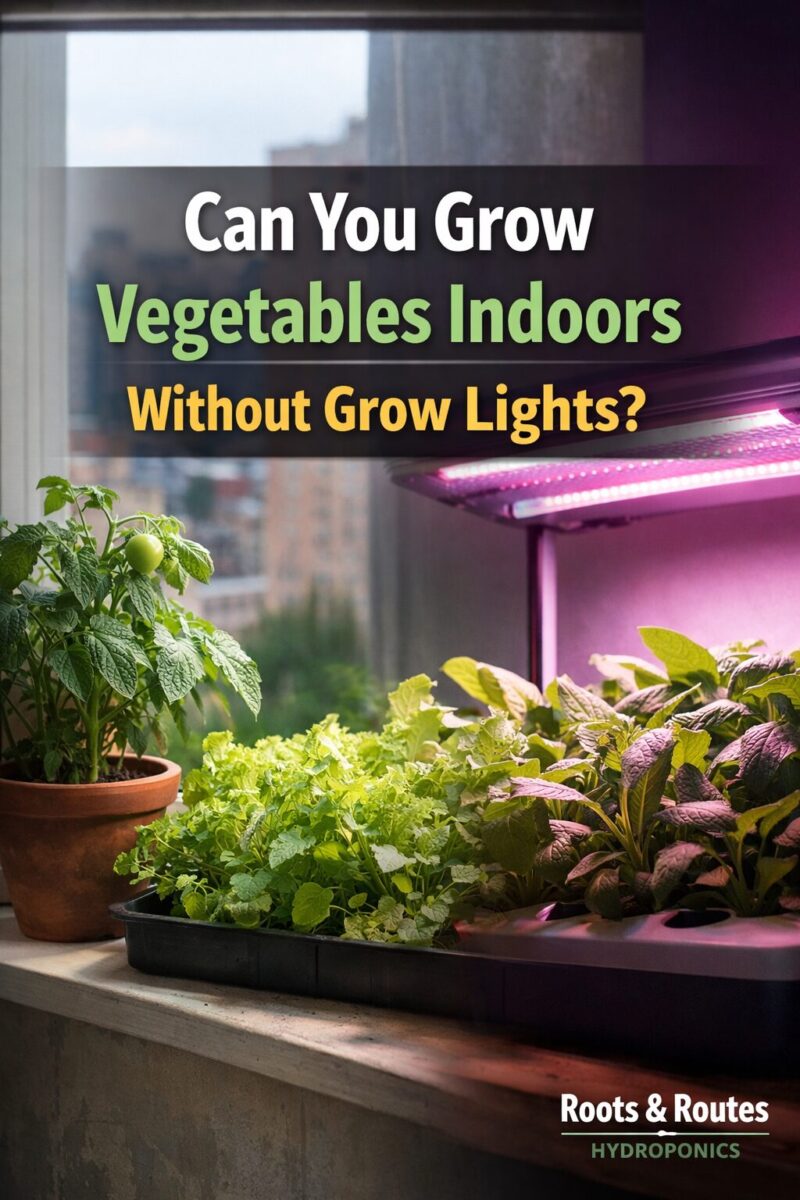
These plants don’t need intense light to stay alive and produce something edible. Yields will be modest, but they’re realistic.
| Plant | Light Tolerance | What You’ll Actually Get |
|---|---|---|
| Lettuce | Low to medium | Small but usable harvests |
| Spinach | Low | Slow growth, tender leaves |
| Arugula | Low | Peppery leaves, thin stems |
| Green onions | Very low | Regrows well from scraps |
| Herbs (mint, parsley) | Low | Sparse but usable |
| Microgreens | Very low | Fast, reliable harvests |
These plants grow leaves, not fruit. That’s the key.
Leafy greens can tolerate low light because they aren’t trying to power flowers and fruit at the same time.
That said, there are rare exceptions.
I’ve personally fruited a hot pepper plant in a window before. It wasn’t perfect, and it definitely wouldn’t have worked year-round — but it did produce real peppers. The reason that worked has less to do with the window and more to do with the plant. Hot peppers are unusually forgiving compared to most fruiting crops. Smaller fruit, lower energy demand, and easier pollination all help.
That doesn’t change the rule — it just explains the edge case.
If expectations are managed, those rare wins can be genuinely satisfying. But they’re the exception, not the model. So let’s clear this up..
What Will Fail (Even If TikTok Says Otherwise)
If someone claims they’re growing fruiting plants indoors without grow lights, one of three things is usually happening:
- They’re exaggerating
- They’re harvesting extremely early
- Or they haven’t waited long enough to see the plant stall or fail
This applies to:
- Tomatoes
- Most peppers (with a few forgiving hot varieties as outliers)
- Cucumbers
- Strawberries
- Beans
- Anything that flowers and fruits
These plants need consistent, high-intensity light. A sunny window might keep them alive for a while, but survival isn’t success. You’ll get leggy growth, dropped flowers, tiny fruit, or nothing at all.
This isn’t a skill issue. It’s physics.
Why Window Light Usually Disappoints
Window light feels bright to us because our eyes adjust. Plants don’t adjust. They measure total light over time.
A grow light runs 12 to 16 hours a day at a consistent intensity. A window gives:
- Changing angles
- Cloud cover
- Seasonal swings
- Short winter days
- Shade from buildings and trees
That’s why plants near windows often stretch toward the glass and look weak. They’re literally reaching for survival.
Can You Do Hydroponics Without Grow Lights?
Technically, yes. Practically, it’s limited.
Hydroponics doesn’t replace light. It just makes water and nutrients more efficient. Without enough light, hydroponic plants stall just like soil-grown ones.
You can grow:
- Lettuce
- Herbs
- Microgreens
You cannot magically grow fruiting crops without giving the plant the energy it needs.
Any system that promises otherwise is selling optimism, not results.
When Going “No Grow Light” Makes Sense
Skipping grow lights is reasonable if:
- You only want leafy greens
- You’re okay with slower growth
- You have decent natural light
- You’re growing for learning, not production
It stops making sense when:
- You expect grocery-level yields
- You want tomatoes or peppers
- You live somewhere with long winters
At that point, frustration usually sets in.
Expert Setup Tip: If you realize your windows aren’t providing enough PAR, adding a small LED is the best move. However, hanging a light too low will “bleach” your leaves, and too high will make plants “leggy.” Use our Light Distance Calculator to find the exact hanging height for your supplemental lighting to ensure your indoor veggies get the intensity they need without the heat stress.
The Honest Tradeoff Nobody Mentions
Here’s the part most articles avoid saying out loud.
Grow lights aren’t about being fancy. They’re about control.
Without them, you’re at the mercy of weather, seasons, and your building layout. With even a small light, suddenly everything becomes predictable. Growth speeds up. Plants look healthier. Results stop feeling random.
That doesn’t mean you need a tent or a loud setup. But it does mean accepting that light is the limiting factor indoors.
My Take
If you want to dip your toe in, start without grow lights. Grow lettuce. Regrow green onions. See how your space behaves.
But if your goal is reliable food, year-round, in a small space, there’s no way around this truth:
Plants don’t care about aesthetics or convenience. They care about light.
Once you accept that, everything else becomes easier.
No hype. No shame. Just working with reality instead of fighting it.
Want Help Choosing the Right Setup?
If you’re on the fence about whether a window is enough or if a small hydroponic system would make things easier, these two tools can help you decide without guessing.
- Hydroponics System Selector Tool
Walks you through size and type to recommend which kind of indoor system actually fits your situation. - Indoor Growing Resources Page
A growing library of practical guides, comparisons, and planning tools for indoor and small-space growing.