
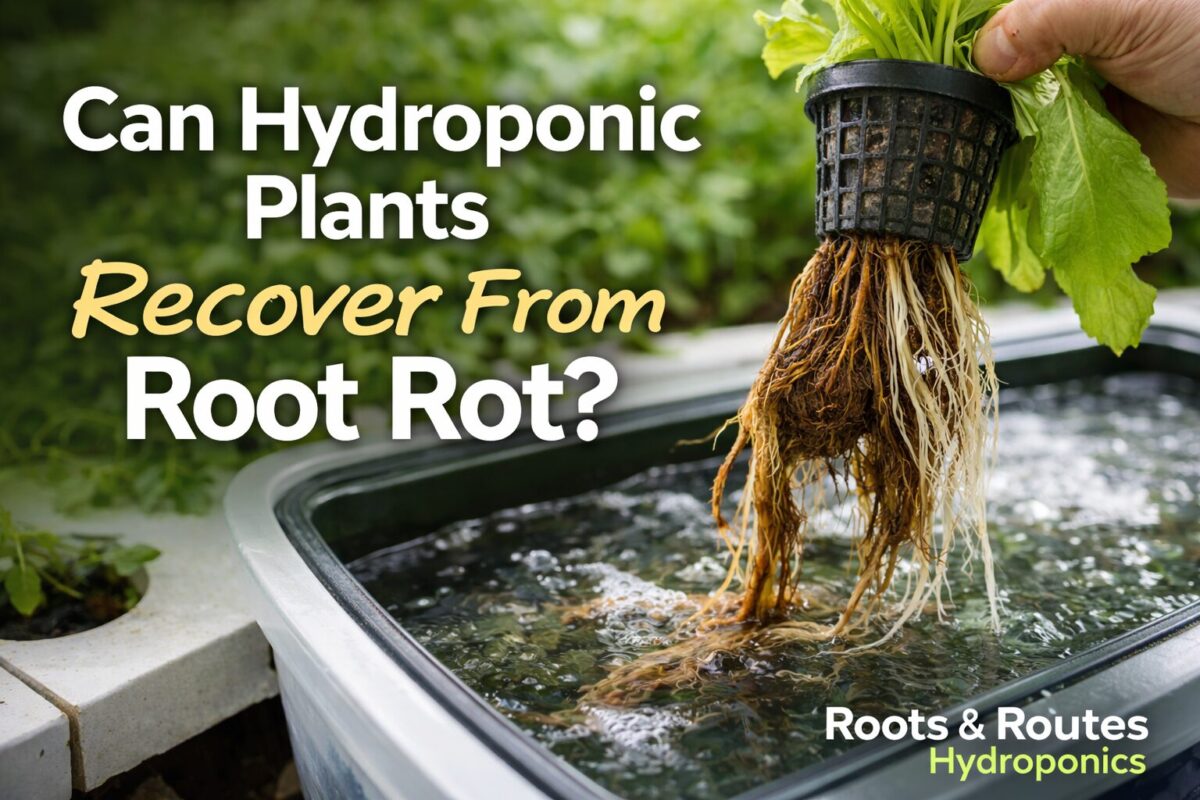
Can hydroponic plants recover from root rot? Yes — sometimes. But recovery depends far less on what product you add and far more on how early you catch it and how stable the system becomes afterward.
Root rot is one of those problems that feels sudden, but in reality it builds quietly. By the time most growers notice it, the roots have already been stressed for a while. That doesn’t mean the plant is doomed. It does mean the window for recovery is smaller than people expect.
What recovery actually looks like
Recovery from root rot is not instant. There is no moment where the plant suddenly “snaps back.” What you are looking for instead is stabilization.
Healthy recovery signs usually show up in this order:
- Root decay stops spreading
- New root tips appear lighter in color
- Leaf decline slows before it improves
- New growth looks better than old growth
Old damaged roots do not heal. They either get trimmed away or stay compromised. Recovery happens when the plant grows new roots under better conditions.
If new roots never appear, recovery is unlikely no matter what additives are used.
When recovery is realistic (and when it isn’t)
Hydroponic plants can recover from root rot if:
- The crown and main stem are still firm
- At least some roots are still white or lightly colored
- The plant is still producing new growth, even slowly
Recovery is unlikely if:
- Roots are fully brown, mushy, and sloughing off
- The plant wilts even in ideal conditions
- The stem base is soft or collapsing
At that point, the system may be salvageable, but the plant usually is not.
Why root rot happens in hydroponics
Root rot is rarely caused by a single mistake. It usually comes from stacked stress:
- Warm nutrient solution
- Low dissolved oxygen
- Organic buildup in the reservoir
- Infrequent system cleaning
- Light leaks reaching the root zone
Once oxygen drops, harmful microbes multiply fast. From there, roots suffocate before they rot. The rot is a symptom, not the starting point.
This is why many “treatments” fail — they focus on killing pathogens instead of fixing oxygen and stability.
What actually helps plants recover
The goal is not to shock the system back to perfection. The goal is to slow everything down so roots can regrow.
What consistently helps:
- Lowering water temperature into a safe range
- Increasing aeration rather than nutrients
- Removing severely damaged root sections
- Keeping nutrient strength moderate, not aggressive
- Preventing further organic buildup
What often makes things worse:
- Drastic nutrient changes
- Overusing sterilizers
- Chasing pH swings repeatedly
- Adding multiple “root boosters” at once
Roots recover best when conditions change gently and then stay consistent.
How long recovery takes
If recovery is going to happen, early signs usually appear within 7 to 14 days. Full recovery takes longer.
You are not waiting for the plant to look perfect. You are waiting for:
- New root growth
- Stable water conditions
- Gradual improvement in new leaves
If nothing improves after two weeks of stability, recovery chances drop significantly.
Preventing it from happening again
Most growers who experience root rot once experience it again — unless the system itself changes.
Long term prevention usually comes from:
- Choosing systems that stay oxygenated
- Avoiding oversized reservoirs that trap heat
- Keeping maintenance predictable
- Running simpler nutrient programs
- Designing setups that forgive small mistakes
This is less about skill and more about system behavior.
If you want to understand which system types are naturally more resistant to root issues, the Resources section breaks down system stability, airflow, and water management in more detail.
Final thoughts
Can hydroponic plants recover from root rot? Sometimes — but only when conditions improve fast and stay stable afterward.
Root rot isn’t a nutrient problem. It’s a system problem. Plants that recover do so because their environment stops working against them.
If there’s one lesson here, it’s this: roots don’t need perfect conditions. They need breathable ones.