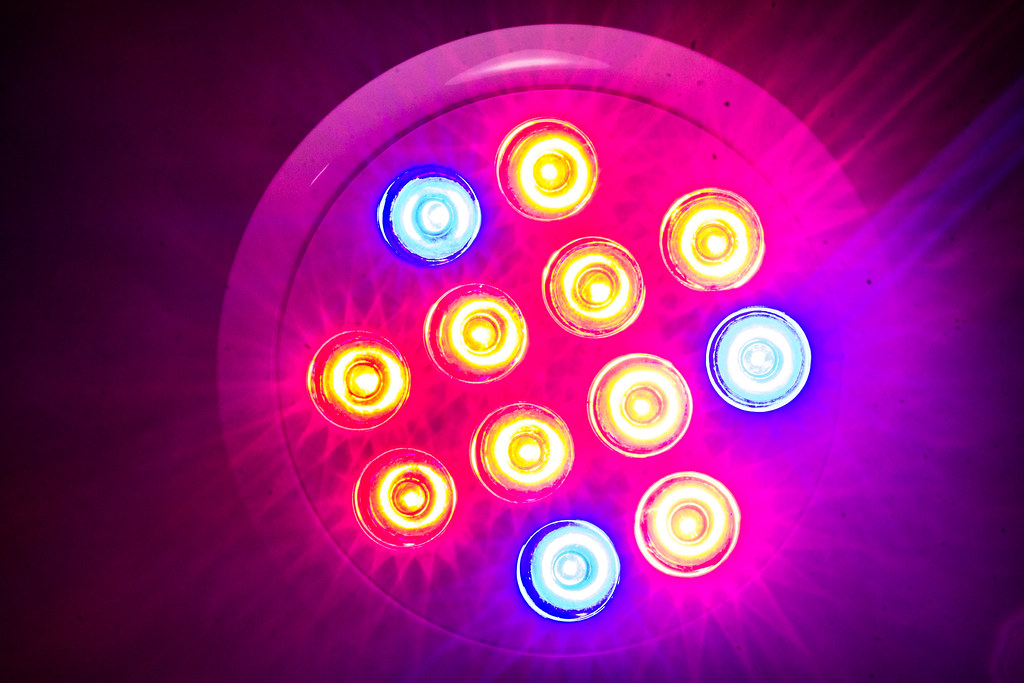
Light is one of the few resources you can’t substitute with better nutrients or genetics. Even top-grade fixtures lose usable photons when walls, floors, or equipment soak up light instead of sending it back to the canopy. That’s where reflective surfaces and thoughtful light distribution come in — they let you extract more usable PAR (photosynthetically active radiation) from the same wattage, tighten internodes, improve side growth, and reduce wasted electricity.
Learn More about Plant Environments <Here
Why Reflective Surfaces Matter
Lights throw photons in every direction, but only a portion hits plant foliage directly. The rest hits walls, floors, and ceilings — if those surfaces are reflective, a significant percentage of that “lost” light gets redirected back to where it matters. The results: more even canopy, stronger side-branching, reduced stretch, and better PPFD at lower canopy levels.
How Reflection Actually Works
Two factors determine useful reflection:
- Reflectance — percentage of light bounced back.
- Diffusion — whether reflected light scatters evenly or forms beams/hot spots.
Plants prefer diffuse reflection. Sharp, mirrored beams create hotspots that scorch tissue and leave other areas underlit. That’s why textured films, matte paints, and diamond-pattern tent walls usually outperform glossy mirrors in practical grows.
Common Reflective Materials (comparison)
| Material | Typical Reflectivity | Pros | Cons |
|---|---|---|---|
| Mylar (smooth) | 90–95% | Very reflective; lightweight; common in tents | Wrinkles create hot spots; tears easily if mishandled |
| Textured Mylar (diamond/hammered) | 90%+ | Diffuses and scatters light; fewer hotspots | Cost slightly higher; still needs careful installation |
| Panda Film (white inwards) | 85–90% | Durable, washable, humidity resistant | Less reflective than premium Mylar; bulkier |
| Flat White Paint (matte) | 80–90% | Cheap, even diffusion, long-lasting, easy to clean | Slightly lower peak reflectivity than highest-grade films |
| Foil-faced insulation | 75–85% | Reflective + insulative; rigid | Can create hot spots if overly glossy |
| Aluminum foil / emergency blanket | 55–75% | Cheap and accessible | Uneven reflection, hot spots, tears easily—avoid |
Types of Reflective Setups
Grow Tents (pre-lined)
Most tents use diamond-pattern or hammered Mylar to scatter light evenly. They’re convenient and require minimal setup.
Fully Lined Rooms
Large rooms can be lined with Panda film, Mylar, or painted white. For grow rooms, balance reflectivity and cleanability—painted walls are easier to keep sanitary in humid environments.
Reflective Curtains & Panels
Portable and repositionable—great for partitioning, shaping light in odd spaces, or creating temporary light baffles.
Reflective Floor Solutions (tiles / panels)
Floors bounce light upward too. Movable reflective tiles or panels placed around pots and channels can rescue lower canopy PPFD and improve side growth dramatically. They’re inexpensive, removable for cleaning, and particularly effective in multi-row or bucket-based systems.
Grow Light Reflectors (hoods, wings, cool-tubes)
Reflectors mounted directly on fixtures shape light before it leaves the fixture. Common shapes:
- Wing reflectors — broad, even spread for HIDs.
- Adjust-a-wing — directional control to reduce spill and shape canopy lighting.
- Cool-tube — keeps bulb temps down but narrows spread and can reduce evenness.
How to Set Up Reflective Surfaces Correctly
1. Keep Everything Flat and Tight
Wrinkles and sagging create angled reflections that cause hot spots and dead zones. Stretch films tight and avoid folds.
2. Seal Light Leaks
Open seams let light escape and lower the useful reflectivity of the room. Overlap seams and use reflective tape or weatherstripping.
3. Use Diffuse Rather Than Mirror-Like Surfaces
Diffused reflection reduces hot spots and gives plants more uniform light exposure. Textured Mylar, diamond patterns, or matte white are preferred over smooth mirrors.
4. Keep Surfaces Clean
Dust, nutrient overspray, and algae reduce reflectivity fast. Wipe down walls and panels regularly; removable floor tiles are handy here.
5. Leave Clearance From Canopy
Don’t let plants touch reflective walls—leaves can overheat or trap humidity. Leave 3–6 inches clearance where possible.
How Reflectivity Affects Plant Growth
- Better light penetration: More photons reach lower leaves and side branches.
- Tighter internodes: Even light reduces stretch and produces denser growth.
- Uniform canopy: Harvest windows tighten when plants grow on the same schedule.
- Improved side-shoot development: Leaf and branch growth becomes fuller, useful for leafy crops.
Common Mistakes with Reflective Surfaces
- Using mirrors or glossy metal: Precise beams cause hotspots and burns.
- Overstuffing the space: Plants touching walls will overheat or get uneven light.
- Ignoring floor reflection: Losing downward photons wastes real light.
- Letting Mylar sag or wrinkle: Performance drops and hot spots appear.
- Using aluminum foil or emergency blankets: Cheap but creates bad, uneven reflections—don’t.
Troubleshooting Light Distribution Problems
| Symptom | Likely Cause | Fix |
|---|---|---|
| Poor side growth | Walls not reflective or badly installed | Add panels/curtains, tighten Mylar, install movable floor tiles |
| Hot spots on leaves | Glossy reflections or mirror surfaces | Swap to matte or textured reflective surfaces, increase canopy clearance |
| Shadow pockets | Obstructions or poor panel placement | Reposition fans/lines, add corner panels, check for hanging objects |
FAQ
Do LEDs need reflectors?
LEDs are directional and often include optics that focus light down. However, reflectors, side-panels, and good room reflectivity still improve edge and canopy uniformity—especially with compact or narrow fixtures.
See our post: Complete Guide to LED Hydroponic Grow Lights
Should I line the ceiling?
Ceiling reflectivity helps in wider rooms or when using low-angle fixtures. In tall rooms, walls matter more than ceiling. If budget and effort allow, ceiling reflectivity is a useful add-on.
Is matte white paint as good as Mylar?
For many growers—especially hobbyists, closet-grows, or budget rooms—flat white paint is nearly as effective as film and wins on durability and maintenance. Professional setups still favor high-end textured films for maximal performance, but paint is an excellent, reliable choice.
Does reflective flooring make a difference?
Yes. Movable reflective tiles or panels can return a surprising amount of downward light to lower canopy levels. They’re especially useful in bucket farms, NFT rows, and multi-tier systems where floor bounce helps bottom leaves.
Installation Checklist
- Choose material based on budget and environment (paint for longevity, Mylar for peak reflectivity).
- Plan for cleaning access—removable floor tiles make sanitation easier.
- Install films tight, seal seams, and tape corners.
- Aim for textured or diffuse surfaces rather than glossy mirrors.
- Keep 3–6″ clearance between walls and canopy; use side reflectors when space is tight.
Final Tips
- Start with flat white paint if you’re on a budget or growing in a closet — it’s low-maintenance and effective.
- Use textured Mylar or diamond-pattern tent walls for tents or dedicated rooms to reduce hotspots.
- Add movable reflective floor tiles in bucket/NFT setups for rapid improvement in lower canopy light.
- Avoid mirrors, foil, and emergency blankets — they create beam reflections and hot spots.
- Keep everything clean, sealed, and taut for the best long-term performance.