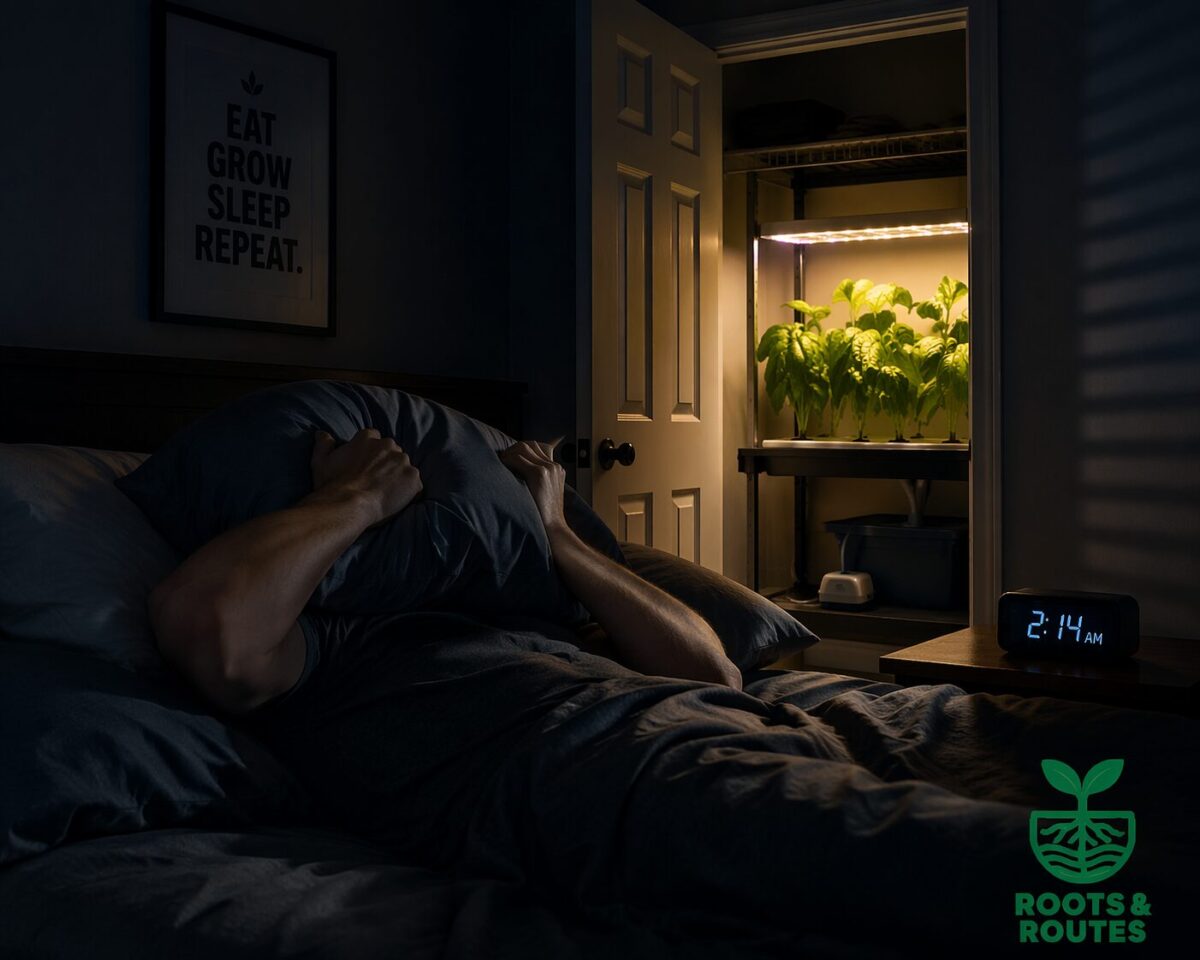
Hydroponics is great for indoor growing, but if your setup is in a bedroom or small apartment, a noisy hydroponic system can quietly ruin your sleep. Air pumps hum, water pumps vibrate, and bubbling reservoirs create a constant background sound that becomes much more noticeable at night. The good news is that building a quiet hydroponic system is usually simple. With the right equipment, system choice, and placement tricks, you can dramatically reduce hydroponic noise without sacrificing plant growth.
Hydroponics has a reputation for being clean, efficient, and perfect for indoor growing. What people don’t talk about much is the other side of that equation: noise.
If your setup lives in a bedroom, apartment, or small house, the little sounds can add up. A faint bubbling pump. A humming air stone. Water trickling through tubing. A grow light fan kicking on at midnight. None of these sounds are loud on their own, but when two or three stack together, your grow system can suddenly become the loudest thing in the room at night.
The good news is that hydroponic systems don’t have to be noisy. Most of the sound issues people run into come from a few specific components, and they can usually be fixed with simple adjustments.
What Causes Noise in Hydroponic Systems
Most indoor hydroponic systems produce sound in one of three ways:
| Noise Source | What It Sounds Like | Why It Happens |
|---|---|---|
| Air pumps | Constant buzzing or humming | Pump diaphragm vibrating |
| Water pumps | Low mechanical hum | Motor moving water |
| Water movement | Trickling or splashing | Water falling back into the reservoir |
Grow lights can also contribute if they use active cooling fans, which add another small but noticeable hum to the room.
None of these sounds are inherently bad, but stack two or three together and suddenly your grow system becomes the loudest thing in the room at night.
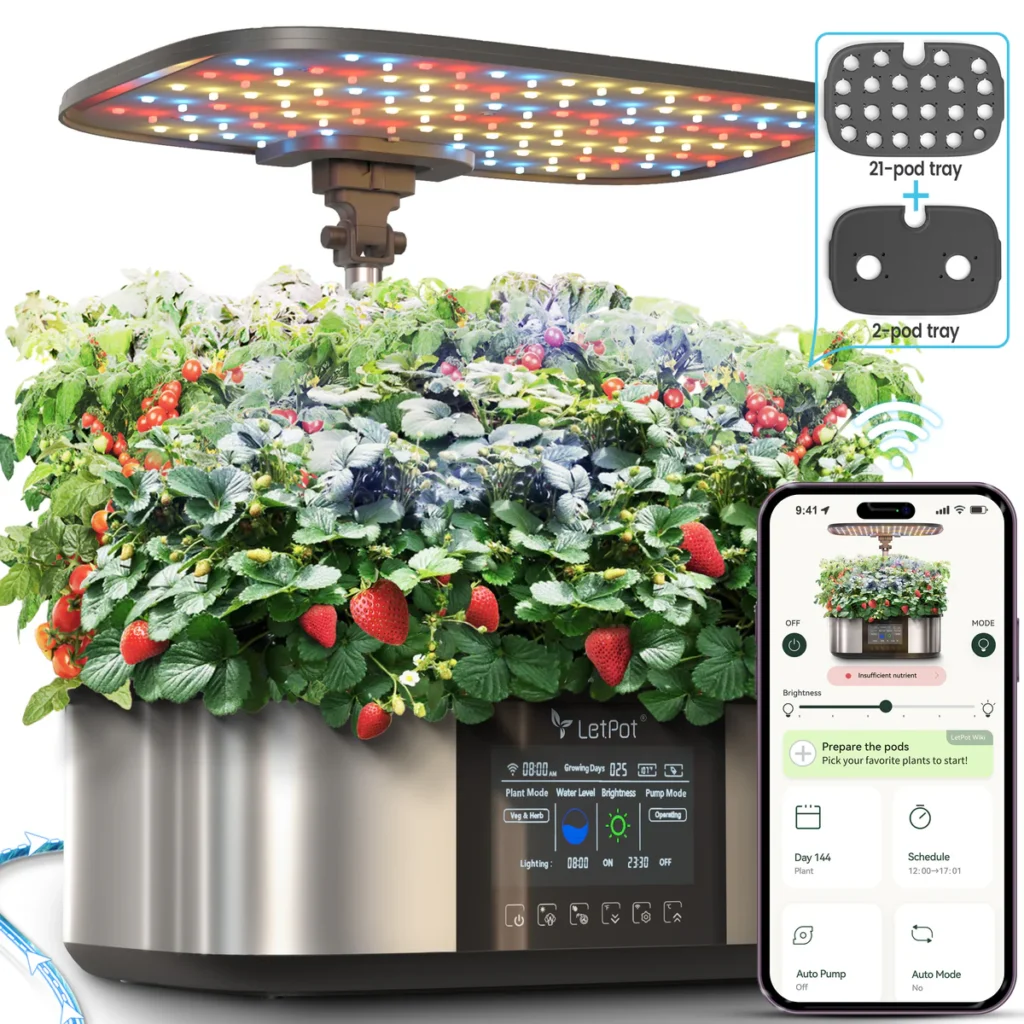
The Quietest Hydroponic Option: Small Tabletop Systems
If noise is a serious concern, small tabletop hydroponic systems are usually the quietest option available.
These systems are designed for kitchens, desks, and apartments, so manufacturers intentionally keep them low noise. Most use:
- Small low-RPM water pumps
- Minimal water drop distance
- Enclosed reservoirs that dampen sound
Because the water movement is gentle and contained, they usually produce only a faint background hum.
For someone growing herbs, lettuce, or small greens indoors, a tabletop setup can be almost silent compared to larger DIY systems.
If noise is a serious concern, small tabletop hydroponic systems are usually the quietest option available. If you’re curious how these systems work or which ones are best for beginners, check out our guide on Compact Tabletop Hydroponic Systems: A Beginner-Friendly Indoor Gardening Solution.
Passive Hydroponic Systems (No Pumps at All)
Another option is to remove the source of noise entirely.
Some hydroponic systems don’t require pumps at all, relying on capillary action or passive nutrient uptake instead.
Examples include:
- Kratky method
- Passive wick systems
With no air pump and no water pump, the system becomes completely silent.
The trade-off is that passive systems usually work best for:
- Leafy greens
- Herbs
- Short-cycle crops
They aren’t ideal for large fruiting plants like tomatoes or peppers, but for many growers they’re more than enough.
If you’re trying to keep a bedroom grow setup quiet, passive systems are one of the simplest solutions.
DWC vs NFT: Which System Is Noisier?
Different hydroponic systems produce very different sound profiles.
| System | Noise Level | Why |
|---|---|---|
| Deep Water Culture (DWC) | Moderate | Air pump bubbling constantly |
| Nutrient Film Technique (NFT) | Low to moderate | Small water pump circulating nutrient film |
A DWC system typically runs an air pump 24 hours a day. The bubbling air stones can create a steady gurgling sound.
An NFT system relies on a small water pump that circulates a thin film of nutrient solution through channels. When tuned correctly, the water flow is gentle and relatively quiet.
In many indoor setups, NFT systems tend to be slightly quieter than DWC, mainly because the pump can be isolated and the water flow is smoother.
That said, both systems can be quiet if designed well.
Choosing a Quiet Air Pump
Air pumps are one of the most common noise sources in hydroponics.
A cheap pump sitting directly on a hard surface will vibrate and amplify sound through the table or floor.
If you’re running DWC or another aerated system, look for low noise air pumps designed for aquariums.
What makes a pump quieter:
- Rubber feet that absorb vibration
- Lower wattage diaphragm designs
- Adjustable airflow settings
Even a good pump can become noisy if it sits on a hard desk or shelf. Placing it on something soft, like a rubber mat or folded towel, can significantly reduce vibration noise.
Quiet Water Circulation Options
Water pumps themselves are usually not very loud. Most of the sound people hear comes from how the water returns to the reservoir.
Here are a few simple ways to keep things quiet:
- Keep the return tubing submerged below the waterline
- Avoid large drops where water falls into the reservoir
- Use wider tubing to reduce splashing and turbulence
The goal is smooth flow rather than falling water. When the return line stays underwater, most of the sound disappears.
Reservoir Placement Matters More Than You Think
Where the reservoir sits can dramatically change how loud your system feels.
Hard surfaces like desks, shelves, and floors can act like soundboards, amplifying pump vibration.
A few simple placement tricks help dampen sound:
- Place the reservoir on foam, cork, or rubber pads
- Avoid direct contact with thin shelves
- Keep pumps from touching the reservoir walls
These small changes prevent vibration from spreading through furniture and making the entire system sound louder.
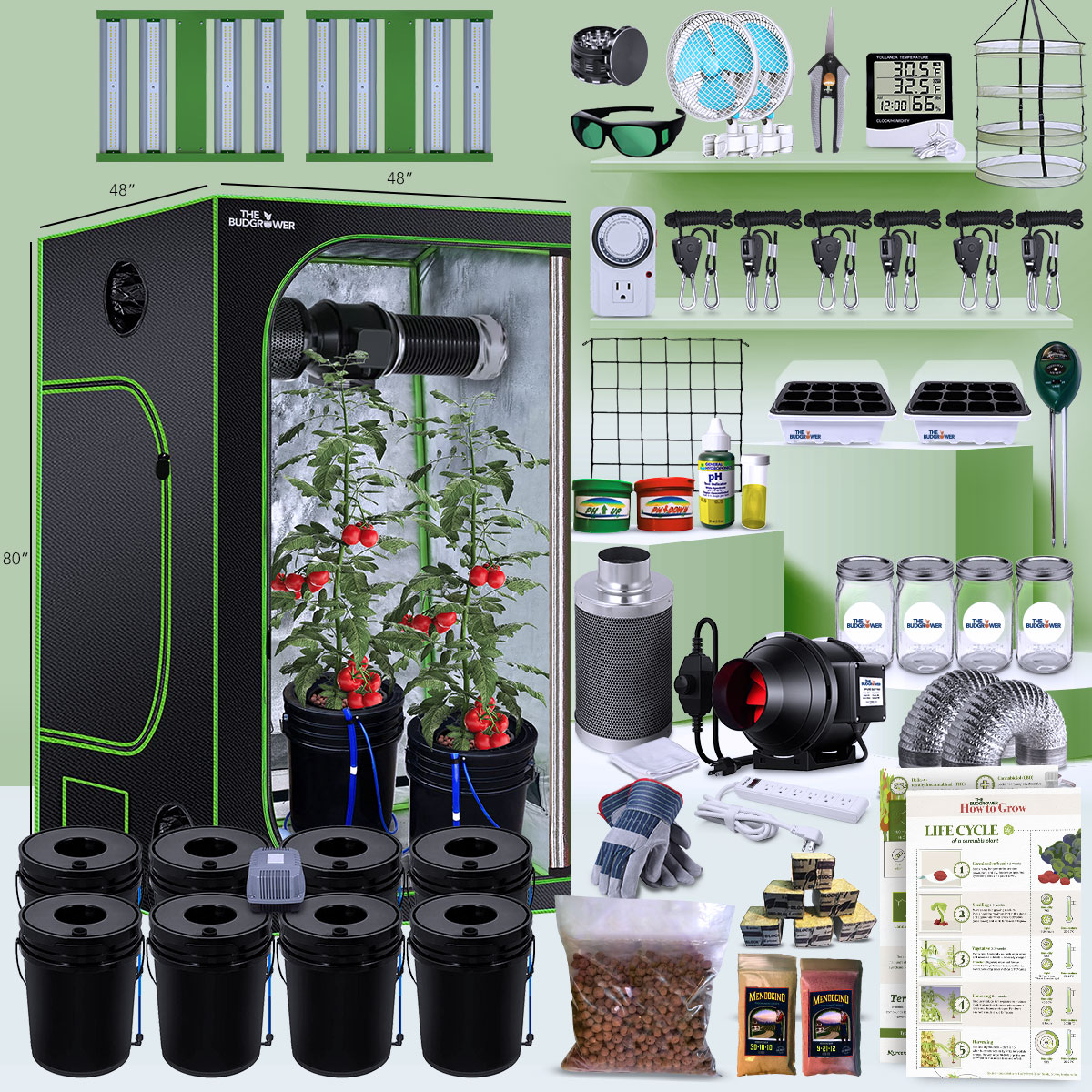
Grow Tents Can Actually Reduce Noise
Grow tents are usually discussed for light control and humidity, but they also help with noise.
The thick fabric walls absorb some of the sound coming from pumps and fans inside the tent. It’s not total soundproofing, but it can soften the mechanical hum of equipment.
Tents also help by containing reflective surfaces and airflow equipment in one enclosed space instead of letting the noise travel through the room.
For larger indoor hydroponic setups, a tent can make the system noticeably quieter from outside the grow area.
If you’re having trouble deciding what system to go with try our Hydroponic System Selector Tool. It contains Recommended products in different sizes and setup types to meet your specific growing needs!
Use Light Timers So Grow Lights Aren’t On at Night
Grow lights themselves are often quiet, but many LED fixtures include cooling fans that run whenever the light is on.
If the light schedule overlaps with your sleep schedule, that fan noise can become the most noticeable sound in the room.
A simple solution is to use light timers.
Instead of running lights overnight, schedule them during daytime hours when background noise from daily activity makes them much less noticeable.
Plants don’t care when the light cycle happens. As long as they get the correct amount of light, shifting the schedule can make a bedroom grow setup much more comfortable.
The Bottom Line
Hydroponic systems don’t have to disrupt your sleep. Most noise issues come from a few common sources: pumps, water movement, and grow light fans.
The easiest ways to quiet things down are:
- Use low noise air pumps
- Submerge return lines to prevent splashing
- Place reservoirs on vibration-absorbing surfaces
- Run grow lights during daytime hours
- Consider passive systems or tabletop units if silence is important
A well-tuned hydroponic setup should blend into the background of a room, not dominate it. With a few small adjustments, it’s possible to keep your plants thriving without turning your bedroom into a fish tank soundtrack.
For more articles and hydroponic topics visit our Resources Page or Questions, Tips & Situations section! We also have a full set of interactive tools to help with light distance, nutrient mixing and more on our Hydroponic Calculators and Tools Page!