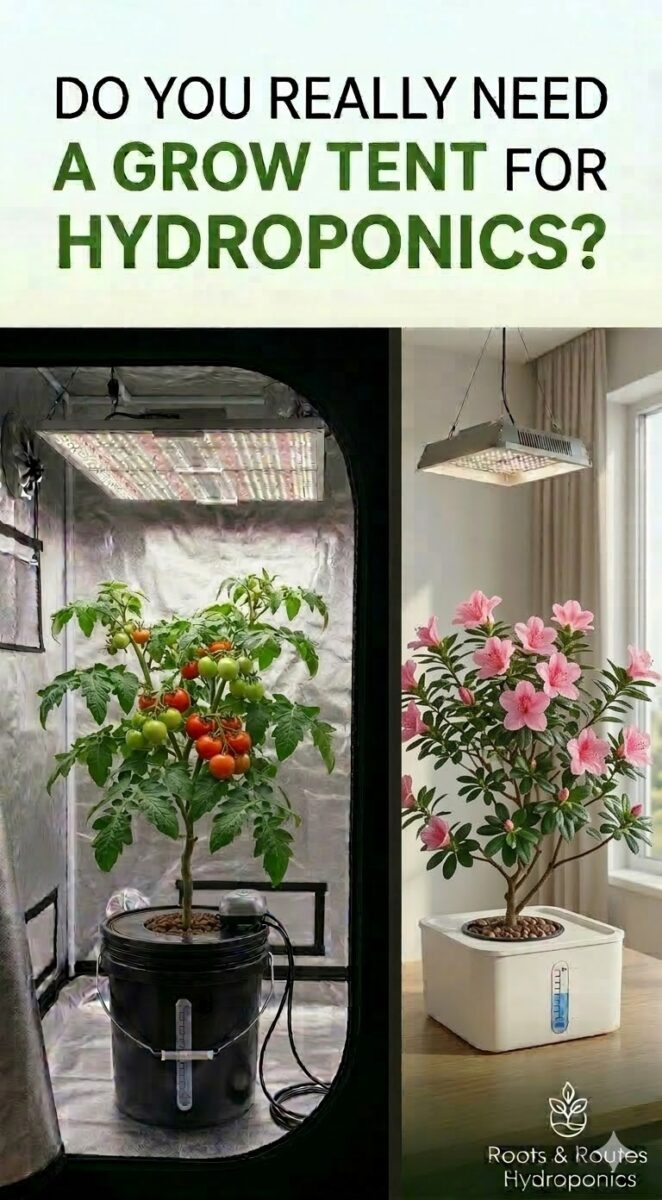
When diving into indoor gardening, one question beginners often ask is: “Do you really need a grow tent, or is it just a nice-to-have?”
The answer depends on your system, your space, and how much control you want over your plants. While small systems can thrive in open air, larger setups or specific plant varieties often benefit from the contained environment a tent provides. This guide breaks down the practical differences to help you decide which path fits your goals.
When You Probably Don’t Need a Tent
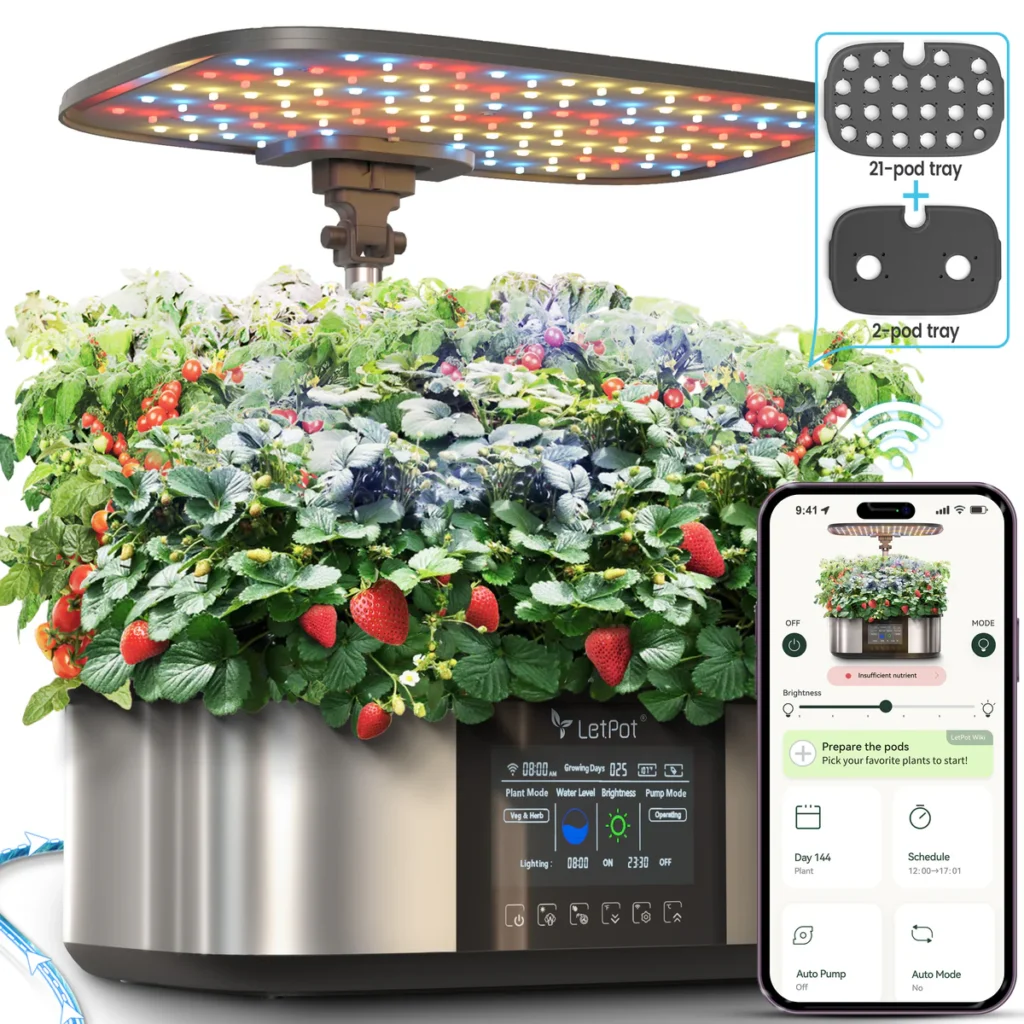
If you are starting with a compact hydroponic setup, a grow tent is often unnecessary. These systems are typically engineered to be self-contained, featuring integrated lights and pumps designed to work in a standard room environment without extra equipment.
Why small systems work without a tent:
- Integrated Lighting: Compact units have lights positioned specifically for their footprint, meaning you don’t need reflective walls to “trap” stray light.
- Ambient Temperature: Small setups generally don’t produce enough heat to require specialized exhaust or cooling systems.
- Low Profile: These units are designed to sit on a kitchen counter or a desk, making them easy to monitor during your daily routine.
The “Kitchen Garden” Logic: Most countertop growers are focusing on “cut-and-come-again” crops like lettuce, kale, and herbs. These plants have lower light requirements and are relatively hardy regarding humidity. Because they don’t reach a massive size, the environmental “micro-climate” created by the water in the reservoir is often enough to keep the immediate air around the leaves sufficiently humid.
Tabletop Gardening: A self-contained system is a practical choice for those who want to grow fresh produce indoors without dedicated construction or ventilation. These units handle the lighting and water cycles in a single, compact footprint.
The Science of the Sealed Environment
Once you move past a few herbs or want to grow fruiting plants like peppers or tomatoes, the physics of your room starts to matter. This is where a grow tent transitions from a luxury to a functional tool.
Understanding Light Efficiency
In an open room, light follows the Inverse Square Law. This means that as light travels away from the source, it loses intensity rapidly. In a room with white or dark walls, a significant portion of your “PAR” (Photosynthetically Active Radiation) is absorbed by the paint or lost in the corners of the room.
A grow tent uses highly reflective Mylar lining to bounce that escaping light back onto the plant canopy from multiple angles. This doesn’t just make the light “brighter”; it ensures that the lower leaves—which are usually shaded—receive enough energy to contribute to the plant’s growth.
VPD: Managing Temperature and Humidity
Vapor Pressure Deficit (VPD) is the measure of how much “room” the air has for more water vapor. If the air is too dry, plants transpire too fast and can suffer from nutrient burn. If it’s too humid, they stop “drinking” and can develop mold.
In an open room, you are at the mercy of your home’s HVAC system. In a tent, you create a closed-loop environment. By using a simple inline fan, you can exhaust hot, humid air and pull in fresh precisely when the plants need it.
The Controlled Environment: For growers moving toward a more dedicated setup, combining a reservoir system with a fitted tent allows for precise control over airflow and light cycles.
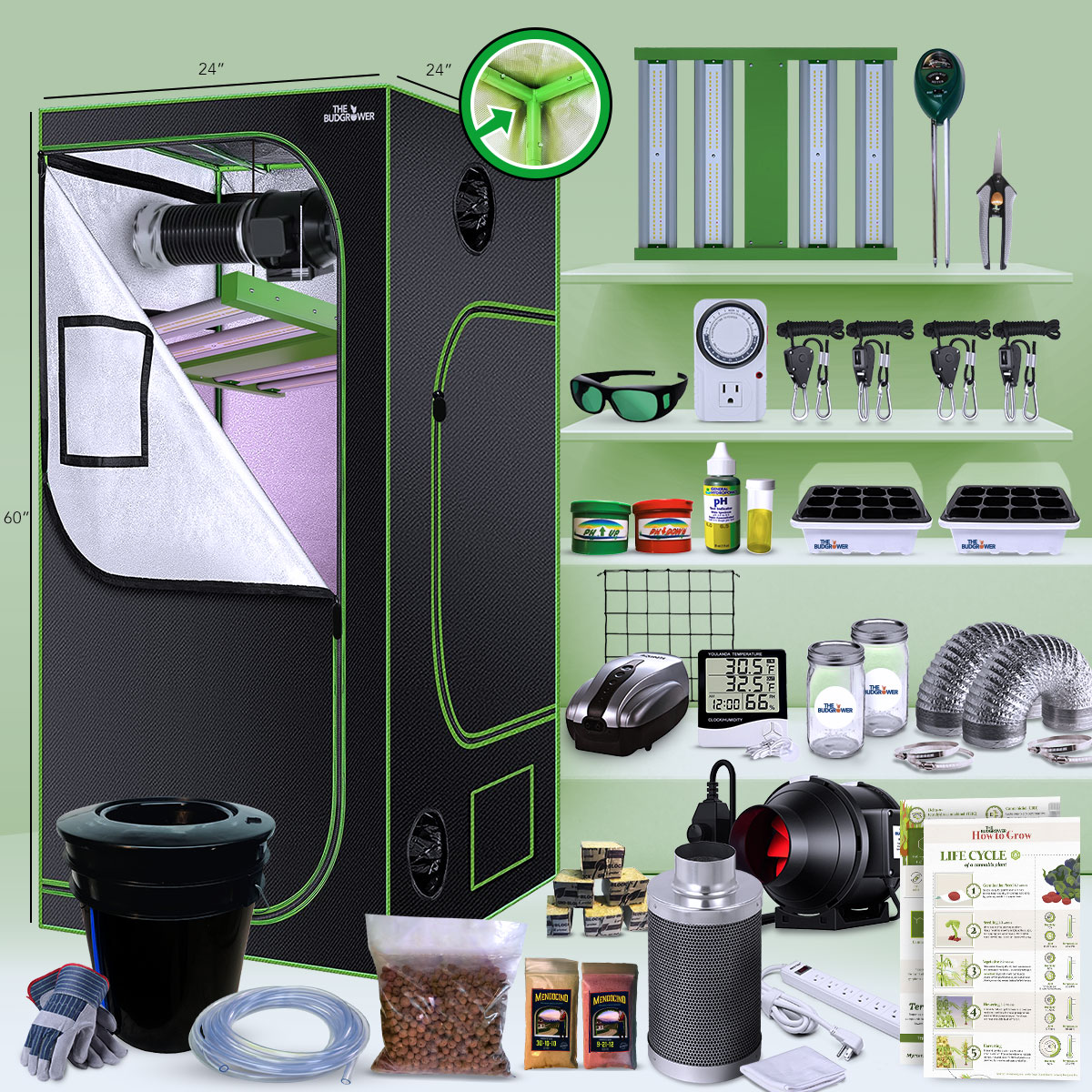
Practical Trade-offs: Living with Your Garden
Deciding on a tent usually comes down to your specific environment and how much you want the garden to impact your daily life.
- Light Pollution: Modern LED grow lights are incredibly bright and often use a “pink” or high-K white spectrum that can be jarring in a living room or bedroom. A tent keeps that light contained, allowing your garden to run on a 18/6 or 12/12 cycle without affecting your sleep or evening relaxation.
- Integrated Pest Management (IPM): It is much easier to treat a pest outbreak in a 4×4 tent than in an entire room. Tents act as a primary bio-security barrier against spider mites, fungus gnats, and even pet hair, which can clog pumps and stick to resinous plants.
- Structural Support: Many tents feature heavy-duty ceiling bars. These are essential for hanging carbon filters, fans, and heavy LED drivers, as well as providing anchor points for “Scrog” (Screen of Green) nets to support heavy fruit.
Scaling Up: When Volume is the Goal
As you transition from a hobby setup to a larger-scale production, the requirements change. Larger plants need more vertical “headroom” for both the root systems and the canopy.
When you have a high density of foliage, the plants “breathe” out a massive amount of moisture. Without a tent and a proper exhaust system, this can actually lead to structural issues in your home, such as peeling wallpaper or mold on your drywall. A tent allows you to duct that moisture directly to a window or a vent, protecting your home while providing the plants with the high-volume air exchange they need for rapid growth.
Expanding the Footprint: When moving to a high-capacity setup, a larger tent provides the necessary height for tall crops and the floor space for multiple reservoirs or larger drainage systems. These setups are designed for those who have more dedicated space and want to produce a higher volume of food.
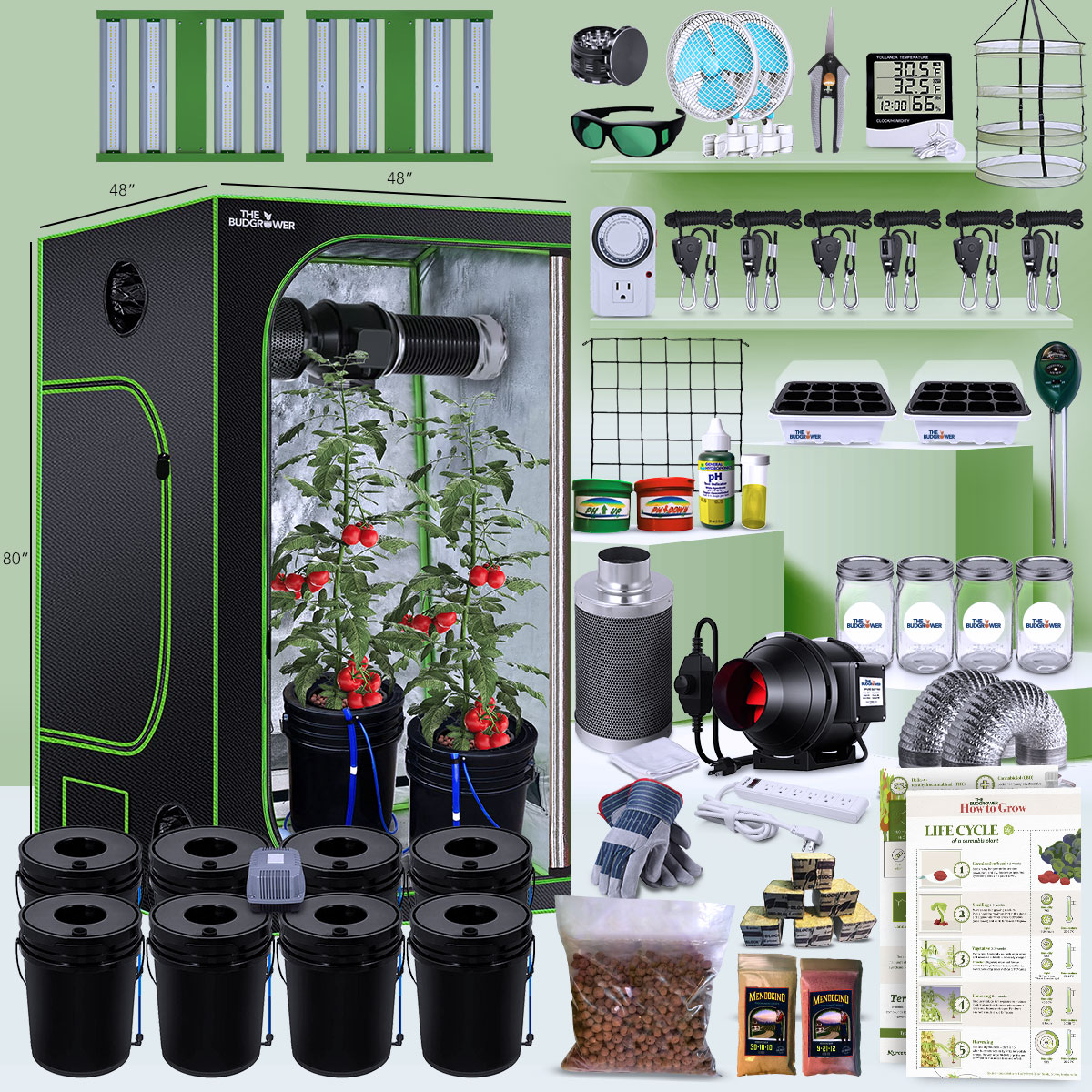
Comparison at a Glance
| Feature | Tabletop Systems | Small/Medium Tent Kits | Large Scale Tents |
| Best For | Herbs & Greens | Peppers, Tomatoes, 2-4 Plants | High-volume production |
| Light Control | Ambient/Exposed | Fully Contained | Professional/Industrial |
| Climate Control | Room-dependent | Exhaust/Intake capable | High-volume air exchange |
| Weekly Maintenance (Est.) | 5-10 mins/week | 20-30 mins/week | 1+ hour/week |
| Home Impact | Decorative | Fits in a closet/corner | Requires dedicated space |
Summary
Do you really need a grow tent? For a small countertop system, the answer is usually no. But for anything larger, or for plants that require specific conditions to thrive, a tent is a functional investment. Start with a system that fits your current space, and consider a tent once you feel the need for more control over your harvests and more protection for your home environment.
For more help deciding what kind of system fits your space or needs, Try our Hydroponic System Selector Tool here!
A grow tent provides the environment, but your data determines the harvest. To help you manage the technical side of your grow, we’ve put together a dedicated Resources Page featuring core articles and guides on hydroponics and system design.
Additionally, you can access our free suite of Interactive Growing Tools. These are the exact calculators we’ve developed to take the guesswork out of our daily garden management