
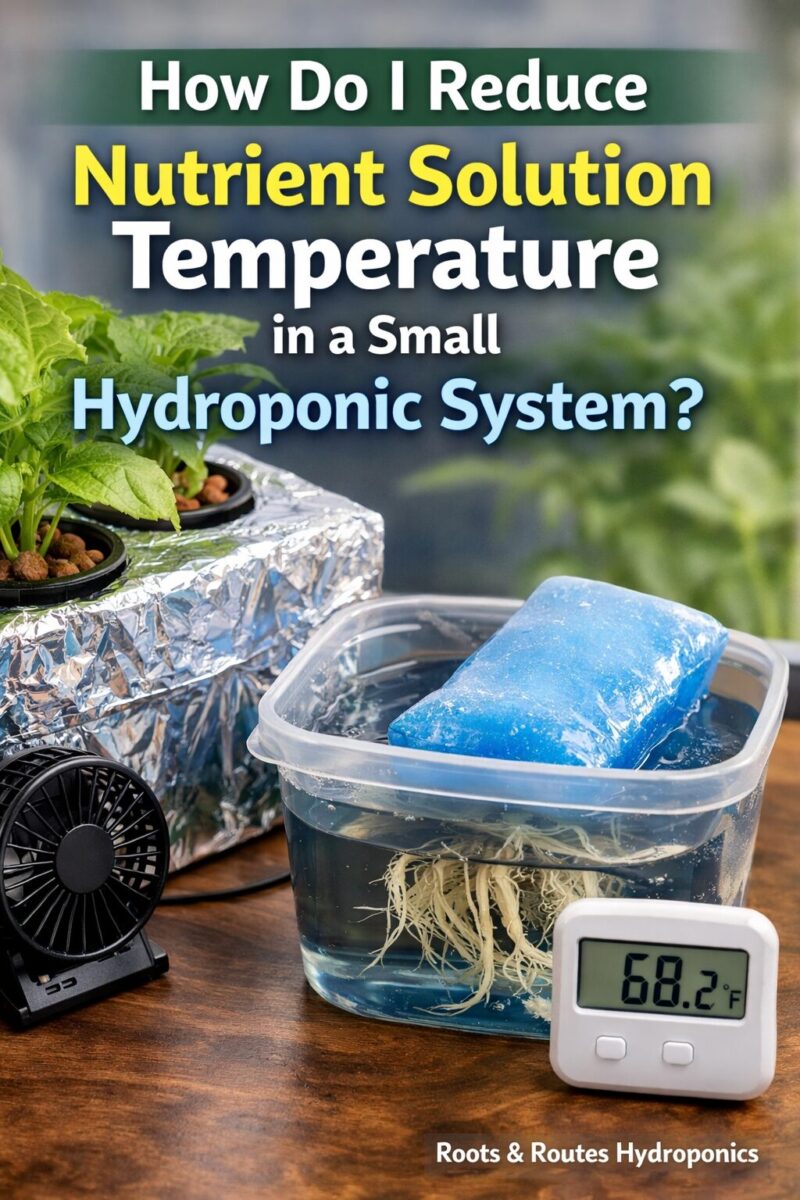
Even in a tiny countertop or windowsill hydroponic setup, nutrient solution temperature can make or break your plants. To keep your water cool, place your system out of direct heat, use insulation, chill the water before adding it, and consider passive cooling or a small chiller. These simple adjustments help roots stay healthy and oxygen-rich.
Why Nutrient Solution Temperature Matters
Hydroponic roots thrive in cooler, oxygen-rich water. Ideally, your nutrient solution should be between 65–72°F (18–22°C) for most leafy greens and herbs. Temperatures above 75°F (24°C) can:
- Reduce oxygen availability
- Encourage algae and harmful bacteria
- Cause root stress and slow growth
Even small systems without pumps or chillers can benefit from smart temperature control.
Step 1: Move Your System Out of Direct Heat
Even a small windowsill system can heat up quickly if it’s near sunlight, radiators, or warm appliances. Place your setup away from direct sun during the hottest part of the day. Avoid placing it on top of warm counters or near vents. If light is needed, consider LED grow lights that emit minimal heat.
Step 2: Use Insulation or Reflective Materials
Wrap reservoirs in reflective material like aluminum foil or white plastic to prevent heat absorption. Styrofoam panels or foam board under your system can help buffer against warm surfaces. Even small modifications can keep your water several degrees cooler.
Step 3: Chill the Water Before Adding It
If your tap water is warm, fill the reservoir with cooled water. Keep a small pitcher in the fridge for topping off throughout the week. For systems with smaller volumes (like Kratky trays or mini DWC), even a degree or two cooler can help stabilize temperature.
Step 4: Add Passive Cooling
Float ice packs in a waterproof bag inside the reservoir. Use a small fan to circulate air around the reservoir—this helps evaporative cooling. For very small setups, a mini USB fan aimed at the water surface can make a difference.
Step 5: Upgrade to a Chiller (Optional for Small Systems)
Miniature aquarium chillers exist for small hydroponic systems. Not always necessary for beginner setups, but they’re an option if you grow tropical herbs or experience persistent heat spikes.
Extra Tips for Small Systems
- Monitor temperatures with a small thermometer—it only takes a few seconds a day.
- Check roots regularly. Healthy roots are white and firm; brown or slimy roots can indicate heat stress.
- Avoid topping off with hot tap water, even for a single tray—small volumes heat up quickly.
Conclusion
Keeping your nutrient solution at the right temperature doesn’t have to be complicated, even for tiny systems. With strategic placement, insulation, and occasional cooling methods, your roots stay happy and your plants grow faster and healthier. Small adjustments go a long way when you’re working with a compact hydroponic setup.
For more tips on creating the ideal growing environment, check out our Environment section. You’ll also find guides, tools, and helpful references on our Resources page to take your hydroponic setup to the next level.